Recording Wildlife and Supporting Local Conservation within the Counties of Somerset

-
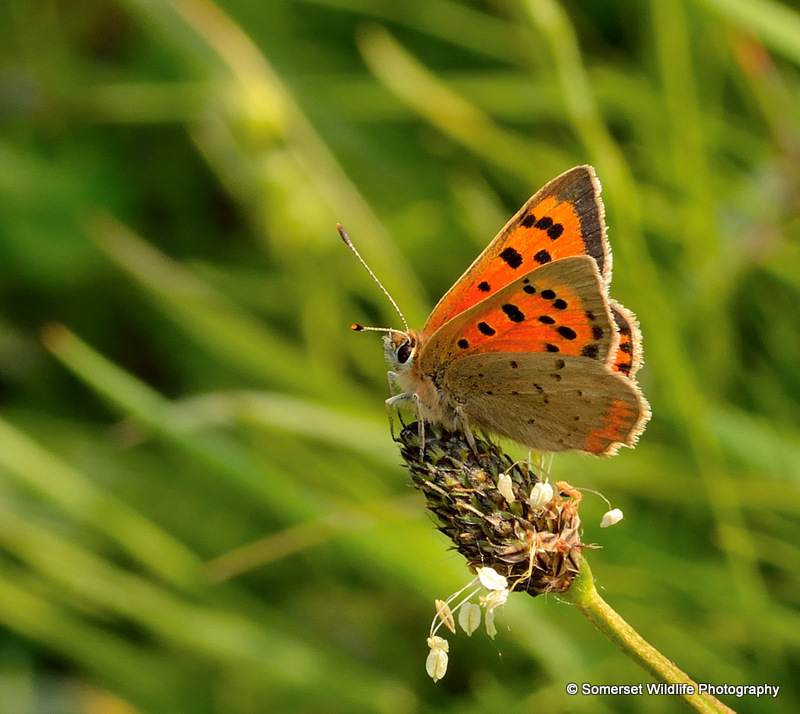
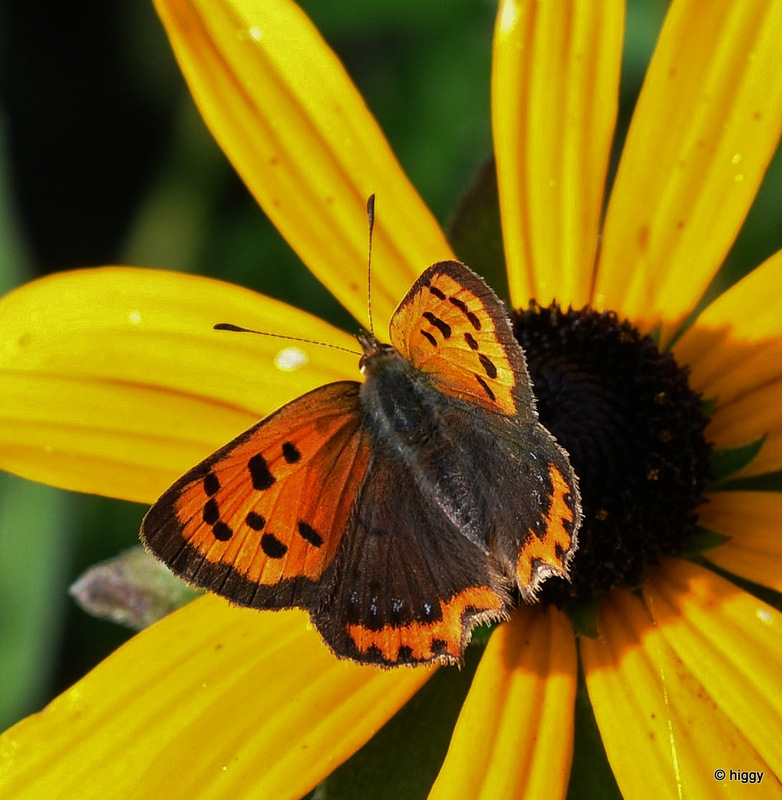
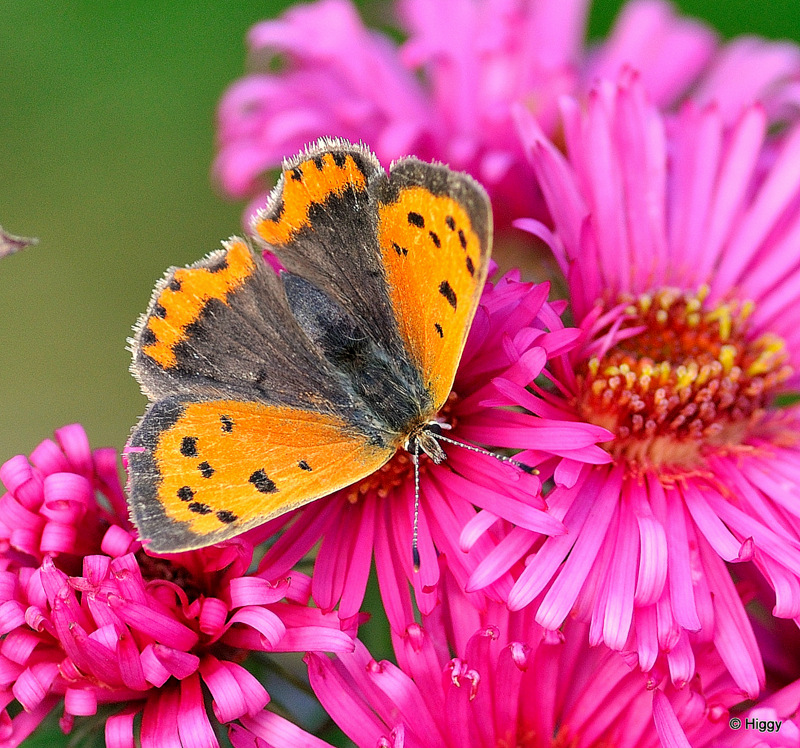
- NAME: Small Copper – Lycaeria phlaeas / WINGSPAN: 34mm / FLIGHT TIME: April-October there are 2, sometimes 3 generations / HABITAT: It favours open land where nectar sources and food plant are found. Such habitats include grassland, wasteland, heathland, old quarries, embankments, road verges and woodland rides / LARVAL FOODPLANT: The main larval foodplants are Common Sorrel (Rumex acetosa) and Sheep’s Sorrel (Rumex acetosella) though Broad-leaved Dock (Rumex obtusifolius) is also used. It overwinters in the larval stage and pupates in April.

-
- NAME: Small Copper – Lycaeria phlaeas / WINGSPAN: 34mm / FLIGHT TIME: April-October there are 2, sometimes 3 generations / HABITAT: It favours open land where nectar sources and food plant are found. Such habitats include grassland, wasteland, heathland, old quarries, embankments, road verges and woodland rides / LARVAL FOODPLANT: The main larval foodplants are Common Sorrel (Rumex acetosa) and Sheep’s Sorrel (Rumex acetosella) though Broad-leaved Dock (Rumex obtusifolius) is also used. It overwinters in the larval stage and pupates in April.
-
- NAME: Small Copper – Lycaeria phlaeas / WINGSPAN: 34mm / FLIGHT TIME: April-October there are 2, sometimes 3 generations / HABITAT: It favours open land where nectar sources and food plant are found. Such habitats include grassland, wasteland, heathland, old quarries, embankments, road verges and woodland rides / LARVAL FOODPLANT: The main larval foodplants are Common Sorrel (Rumex acetosa) and Sheep’s Sorrel (Rumex acetosella) though Broad-leaved Dock (Rumex obtusifolius) is also used. It overwinters in the larval stage and pupates in April.
-
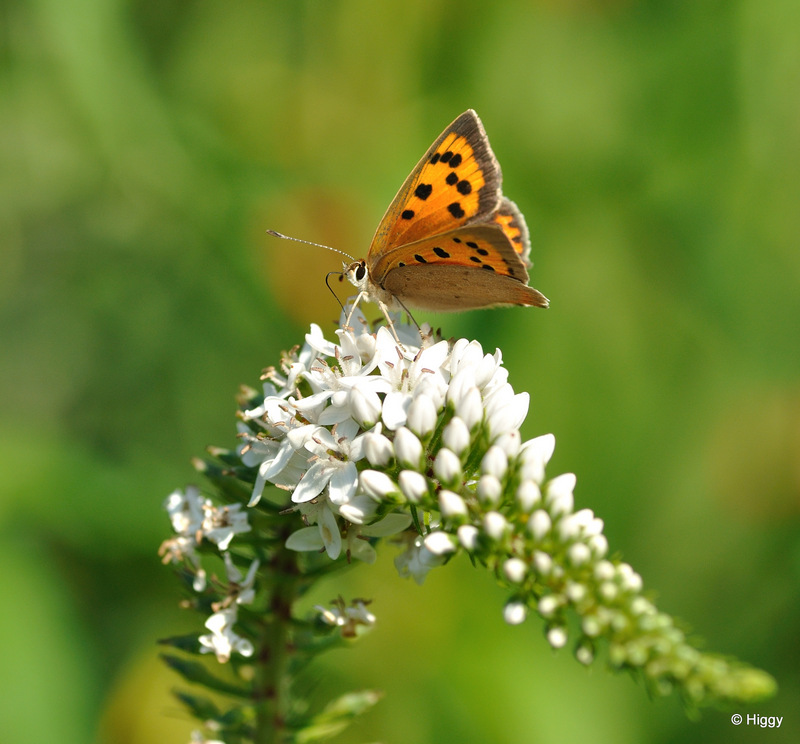
- NAME: Small Copper – Lycaeria phlaeas / WINGSPAN: 34mm / FLIGHT TIME: April-October there are 2, sometimes 3 generations / HABITAT: It favours open land where nectar sources and food plant are found. Such habitats include grassland, wasteland, heathland, old quarries, embankments, road verges and woodland rides / LARVAL FOODPLANT: The main larval foodplants are Common Sorrel (Rumex acetosa) and Sheep’s Sorrel (Rumex acetosella) though Broad-leaved Dock (Rumex obtusifolius) is also used. It overwinters in the larval stage and pupates in April.
-
- NAME: Small Copper – Lycaeria phlaeas / WINGSPAN: 34mm / FLIGHT TIME: April-October there are 2, sometimes 3 generations / HABITAT: It favours open land where nectar sources and food plant are found. Such habitats include grassland, wasteland, heathland, old quarries, embankments, road verges and woodland rides / LARVAL FOODPLANT: The main larval foodplants are Common Sorrel (Rumex acetosa) and Sheep’s Sorrel (Rumex acetosella) though Broad-leaved Dock (Rumex obtusifolius) is also used. It overwinters in the larval stage and pupates in April.
-
- NAME: Small Copper – Lycaeria phlaeas / WINGSPAN: 34mm / FLIGHT TIME: April-October there are 2, sometimes 3 generations / HABITAT: It favours open land where nectar sources and food plant are found. Such habitats include grassland, wasteland, heathland, old quarries, embankments, road verges and woodland rides / LARVAL FOODPLANT: The main larval foodplants are Common Sorrel (Rumex acetosa) and Sheep’s Sorrel (Rumex acetosella) though Broad-leaved Dock (Rumex obtusifolius) is also used. It overwinters in the larval stage and pupates in April.

-
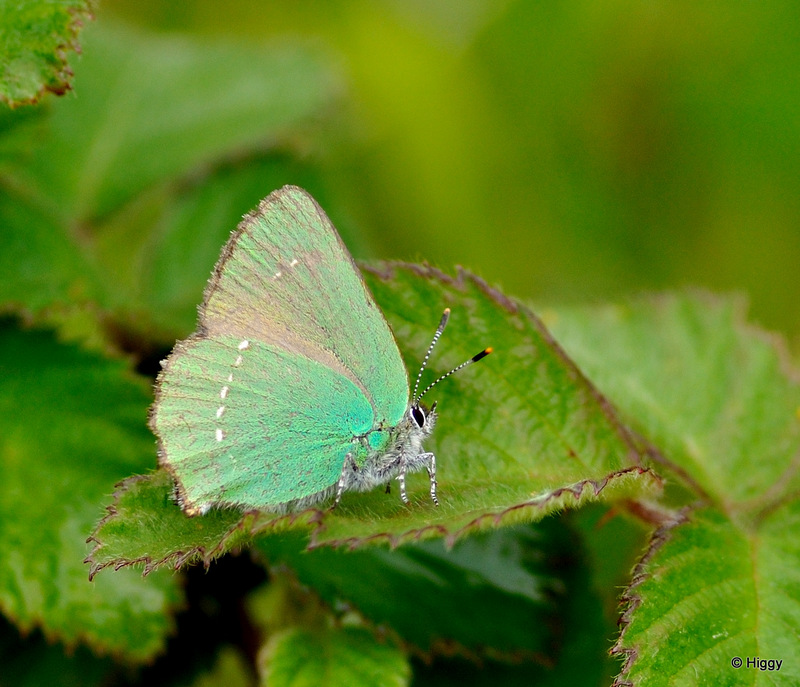
- NAME: Green Hairstreak – Callophrys rubi / WINGSPAN: 33mm / FLIGHT TIME: April to July / HABITAT: Grassland habitats / LARVAL FOODPLANT: Thistles and Knapweed

-
- NAME: Green Hairstreak – Callophrys rubi / WINGSPAN: 33mm / FLIGHT TIME: April to July / HABITAT: Grassland habitats / LARVAL FOODPLANT: Thistles and Knapweed
-
- NAME: Green Hairstreak – Callophrys rubi / WINGSPAN: 33mm / FLIGHT TIME: April to July / HABITAT: Grassland habitats / LARVAL FOODPLANT: Thistles and Knapweed

-
- NAME: Green Hairstreak – Callophrys rubi / WINGSPAN: 33mm / FLIGHT TIME: April to July / HABITAT: Grassland habitats / LARVAL FOODPLANT: Thistles and Knapweed

-
- NAME: Green Hairstreak – Callophrys rubi / WINGSPAN: 33mm / FLIGHT TIME: April to July / HABITAT: Grassland habitats / LARVAL FOODPLANT: Thistles and Knapweed

-
- NAME: Green Hairstreak – Callophrys rubi / WINGSPAN: 33mm / FLIGHT TIME: April to July / HABITAT: Grassland habitats / LARVAL FOODPLANT: Thistles and Knapweed

-
- NAME: Purple Hairstreak – Neozephyrus quercus / WINGSPAN: 36mm / FLIGHT TIME: June-September / HABITAT: In and around Oak Trees / LARVAL FOODPLANT: Oak buds

-
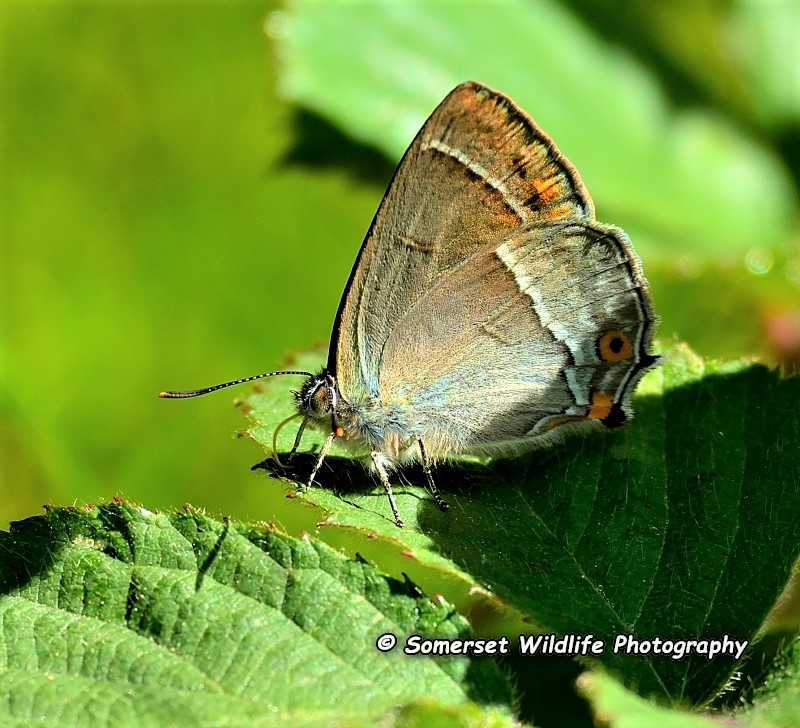
- NAME: Purple Hairstreak – Neozephyrus quercus / WINGSPAN: 36mm / FLIGHT TIME: June-September / HABITAT: In and around Oak Trees / LARVAL FOODPLANT: Oak buds
-
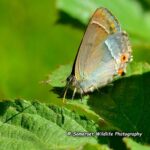
- NAME: Purple Hairstreak – Neozephyrus quercus / WINGSPAN: 36mm / FLIGHT TIME: June-September / HABITAT: In and around Oak Trees / LARVAL FOODPLANT: Oak buds

-
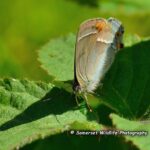
- NAME: Purple Hairstreak – Neozephyrus quercus / WINGSPAN: 36mm / FLIGHT TIME: June-September / HABITAT: In and around Oak Trees / LARVAL FOODPLANT: Oak buds

-
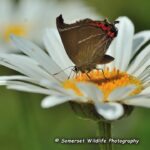
- NAME: White-letter Hairstreak – Satyrium w-album / WINGSPAN: 36mm / FLIGHT TIME: June-August / HABITAT: In and around Elm Trees / LARVAL FOODPLANT: Elm is the sole food for this caterpillar.

-

- NAME: White-letter Hairstreak – Satyrium w-album / WINGSPAN: 36mm / FLIGHT TIME: June-August / HABITAT: In and around Elm Trees / LARVAL FOODPLANT: Elm is the sole food for this caterpillar.

-

- NAME: White-letter Hairstreak – Satyrium w-album / WINGSPAN: 36mm / FLIGHT TIME: June-August / HABITAT: In and around Elm Trees / LARVAL FOODPLANT: Elm is the sole food for this caterpillar.

-

- NAME: White-letter Hairstreak – Satyrium w-album / WINGSPAN: 36mm / FLIGHT TIME: June-August / HABITAT: In and around Elm Trees / LARVAL FOODPLANT: Elm is the sole food for this caterpillar.

-

- NAME: White-letter Hairstreak – Satyrium w-album / WINGSPAN: 36mm / FLIGHT TIME: June-August / HABITAT: In and around Elm Trees / LARVAL FOODPLANT: Elm is the sole food for this caterpillar.

-

- NAME: White-letter Hairstreak – Satyrium w-album / WINGSPAN: 36mm / FLIGHT TIME: June-August / HABITAT: In and around Elm Trees / LARVAL FOODPLANT: Elm is the sole food for this caterpillar.

-
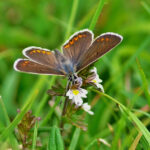
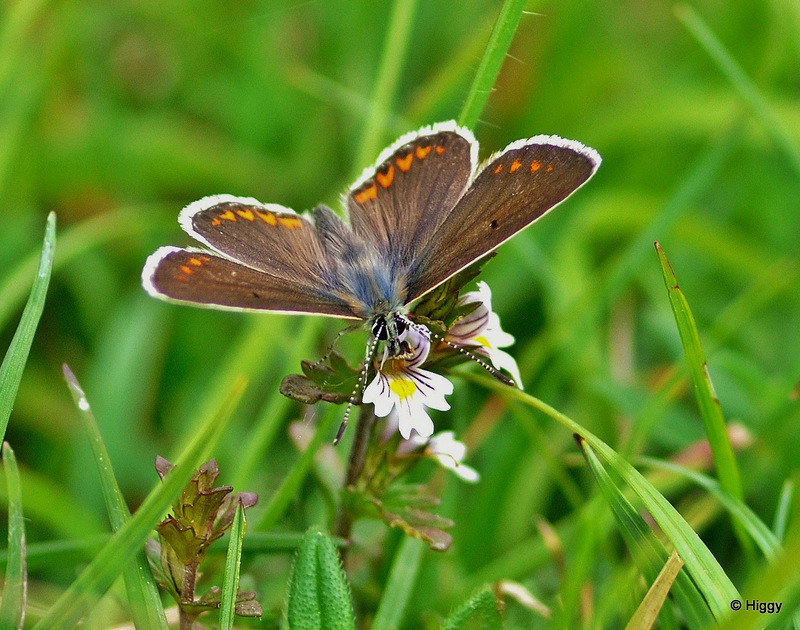
- NAME: Brown Argus – Aricia agestis / WINGSPAN: 28mm / FLIGHT TIME: May-June & July-Sept second generation, sometimes 3 generations / HABITAT: Typically found on chalk or limestone downland where the food plant is abundant. However, this species can also be found on heathland and in open woodland / LARVAL FOODPLANT: The main larval foodplant is Common Rock-rose (Helianthemum nummularium). Common Stork’s-bill (Erodium cicutarium) and Dove’s-foot Crane’s-bill (Geranium molle) are also used. Adults come to Purple Loosestrife in my North Somerset garden.
-

- NAME: Brown Argus – Aricia agestis / WINGSPAN: 28mm / FLIGHT TIME: May-June & July-Sept second generation, sometimes 3 generations / HABITAT: Typically found on chalk or limestone downland where the food plant is abundant. However, this species can also be found on heathland and in open woodland / LARVAL FOODPLANT: The main larval foodplant is Common Rock-rose (Helianthemum nummularium). Common Stork’s-bill (Erodium cicutarium) and Dove’s-foot Crane’s-bill (Geranium molle) are also used. Adults come to Purple Loosestrife in my North Somerset garden.

-
- NAME: Brown Argus – Aricia agestis / WINGSPAN: 28mm / FLIGHT TIME: May-June & July-Sept second generation, sometimes 3 generations / HABITAT: Typically found on chalk or limestone downland where the food plant is abundant. However, this species can also be found on heathland and in open woodland / LARVAL FOODPLANT: The main larval foodplant is Common Rock-rose (Helianthemum nummularium). Common Stork’s-bill (Erodium cicutarium) and Dove’s-foot Crane’s-bill (Geranium molle) are also used. Adults come to Purple Loosestrife in my North Somerset garden.

-
- NAME: Brown Argus – Aricia agestis / WINGSPAN: 28mm / FLIGHT TIME: May-June & July-Sept second generation, sometimes 3 generations / HABITAT: Typically found on chalk or limestone downland where the food plant is abundant. However, this species can also be found on heathland and in open woodland / LARVAL FOODPLANT: The main larval foodplant is Common Rock-rose (Helianthemum nummularium). Common Stork’s-bill (Erodium cicutarium) and Dove’s-foot Crane’s-bill (Geranium molle) are also used. Adults come to Purple Loosestrife in my North Somerset garden.

-
- NAME: Brown Argus – Aricia agestis / WINGSPAN: 28mm / FLIGHT TIME: May-June & July-Sept second generation, sometimes 3 generations / HABITAT: Typically found on chalk or limestone downland where the food plant is abundant. However, this species can also be found on heathland and in open woodland / LARVAL FOODPLANT: The main larval foodplant is Common Rock-rose (Helianthemum nummularium). Common Stork’s-bill (Erodium cicutarium) and Dove’s-foot Crane’s-bill (Geranium molle) are also used. Adults come to Purple Loosestrife in my North Somerset garden.

-
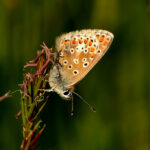
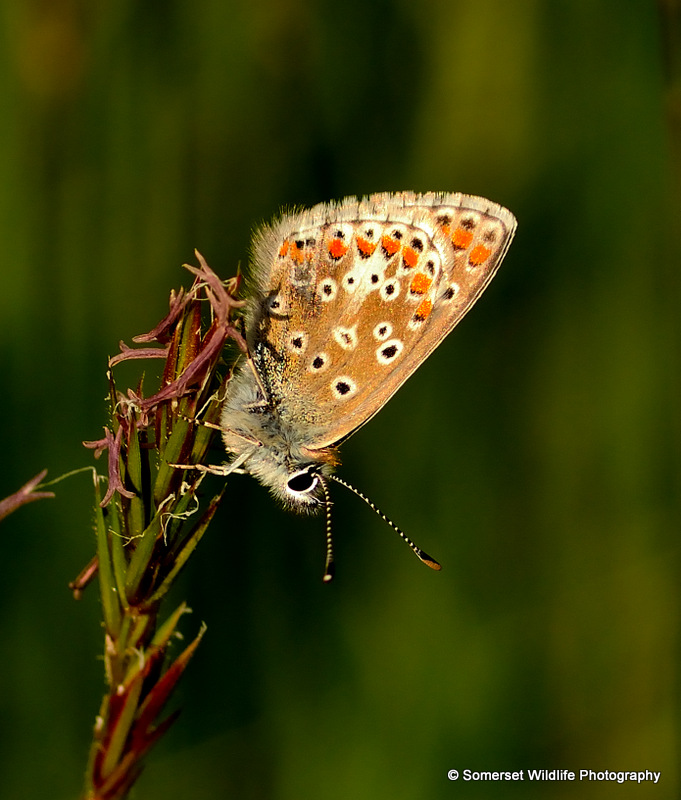
- NAME: Brown Argus – Aricia agestis / WINGSPAN: 28mm / FLIGHT TIME: May-June & July-Sept second generation, sometimes 3 generations / HABITAT: Typically found on chalk or limestone downland where the food plant is abundant. However, this species can also be found on heathland and in open woodland / LARVAL FOODPLANT: The main larval foodplant is Common Rock-rose (Helianthemum nummularium). Common Stork’s-bill (Erodium cicutarium) and Dove’s-foot Crane’s-bill (Geranium molle) are also used. Adults come to Purple Loosestrife in my North Somerset garden.
-

- NAME: Chalkhill Blue – Polyommatus coridon / WINGSPAN: 38mm / FLIGHT TIME: July-September / HABITAT: Chalk and limestone grassland. This species lives in discrete colonies where its foodplant, Horseshoe Vetch, is found in abundance. It is also a warmth-loving butterfly, and is typically found on sheltered, south-facing hillsides. Draycott Sleights and Uphill in Weston-super-Mare are the two best places to see it in Somerset / LARVAL FOODPLANT: Horseshoe Vetch

-
- NAME: Chalkhill Blue – Polyommatus coridon / WINGSPAN: 38mm / FLIGHT TIME: July-September / HABITAT: Chalk and limestone grassland. This species lives in discrete colonies where its foodplant, Horseshoe Vetch, is found in abundance. It is also a warmth-loving butterfly, and is typically found on sheltered, south-facing hillsides. Draycott Sleights and Uphill in Weston-super-Mare are the two best places to see it in Somerset / LARVAL FOODPLANT: Horseshoe Vetch

-
- NAME: Chalkhill Blue – Polyommatus coridon / WINGSPAN: 38mm / FLIGHT TIME: July-September / HABITAT: Chalk and limestone grassland. This species lives in discrete colonies where its foodplant, Horseshoe Vetch, is found in abundance. It is also a warmth-loving butterfly, and is typically found on sheltered, south-facing hillsides. Draycott Sleights and Uphill in Weston-super-Mare are the two best places to see it in Somerset / LARVAL FOODPLANT: Horseshoe Vetch

-
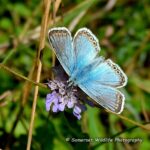
- NAME: Chalkhill Blue – Polyommatus coridon / WINGSPAN: 38mm / FLIGHT TIME: July-September / HABITAT: Chalk and limestone grassland. This species lives in discrete colonies where its foodplant, Horseshoe Vetch, is found in abundance. It is also a warmth-loving butterfly, and is typically found on sheltered, south-facing hillsides. Draycott Sleights and Uphill in Weston-super-Mare are the two best places to see it in Somerset / LARVAL FOODPLANT: Horseshoe Vetch

-
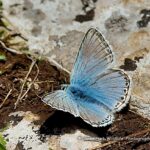
- NAME: Chalkhill Blue – Polyommatus coridon / WINGSPAN: 38mm / FLIGHT TIME: July-September / HABITAT: Chalk and limestone grassland. This species lives in discrete colonies where its foodplant, Horseshoe Vetch, is found in abundance. It is also a warmth-loving butterfly, and is typically found on sheltered, south-facing hillsides. Draycott Sleights and Uphill in Weston-super-Mare are the two best places to see it in Somerset / LARVAL FOODPLANT: Horseshoe Vetch

-

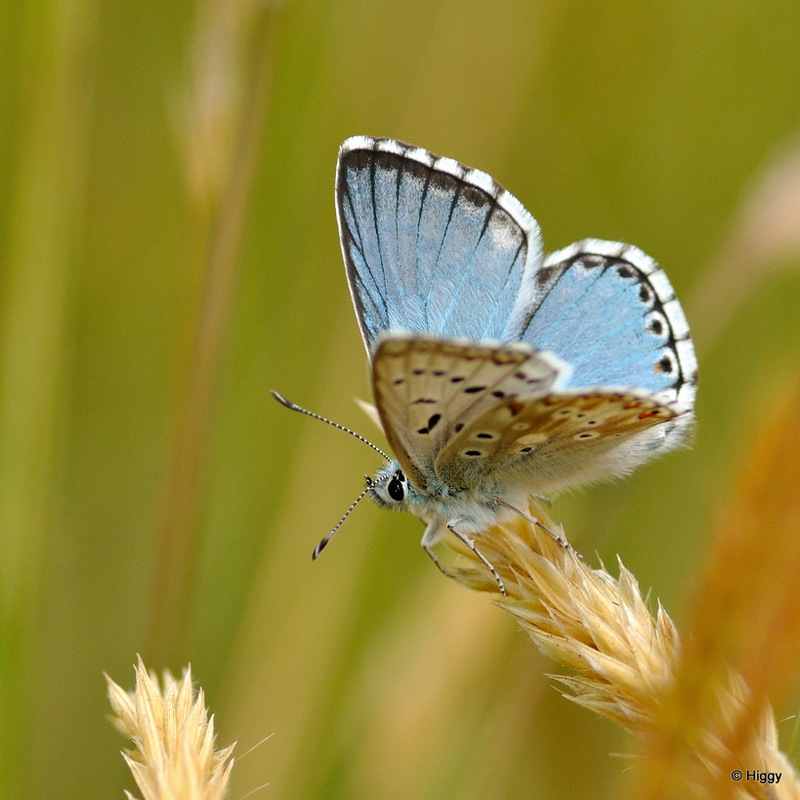
- NAME: Chalkhill Blue – Polyommatus coridon / WINGSPAN: 38mm / FLIGHT TIME: July-September / HABITAT: Chalk and limestone grassland. This species lives in discrete colonies where its foodplant, Horseshoe Vetch, is found in abundance. It is also a warmth-loving butterfly, and is typically found on sheltered, south-facing hillsides. Draycott Sleights and Uphill in Weston-super-Mare are the two best places to see it in Somerset / LARVAL FOODPLANT: Horseshoe Vetch
-

- NAME: Common Blue – Polyommatus icarus / WINGSPAN: 35mm / FLIGHT TIME: May-October / HABITAT: A wide variety of habitats, including unimproved grassland such as roadside verges and waste ground, downland, woodland clearings, heathland and even sand dunes / LARVAL FOODPLANT: The main larval foodplant is Common Bird’s-foot-trefoil (Lotus corniculatus), but Black Medick (Medicago lupulina), Common Restharrow (Ononis repens), Greater Bird’s-foot-trefoil (Lotus pedunculatus) and Lesser Trefoil (Trifolium dubium) are also used.

-
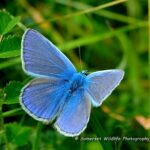
- NAME: Common Blue – Polyommatus icarus / WINGSPAN: 35mm / FLIGHT TIME: May-October / HABITAT: A wide variety of habitats, including unimproved grassland such as roadside verges and waste ground, downland, woodland clearings, heathland and even sand dunes / LARVAL FOODPLANT: The main larval foodplant is Common Bird’s-foot-trefoil (Lotus corniculatus), but Black Medick (Medicago lupulina), Common Restharrow (Ononis repens), Greater Bird’s-foot-trefoil (Lotus pedunculatus) and Lesser Trefoil (Trifolium dubium) are also used.

-
- NAME: Common Blue – Polyommatus icarus / WINGSPAN: 35mm / FLIGHT TIME: May-October / HABITAT: A wide variety of habitats, including unimproved grassland such as roadside verges and waste ground, downland, woodland clearings, heathland and even sand dunes / LARVAL FOODPLANT: The main larval foodplant is Common Bird’s-foot-trefoil (Lotus corniculatus), but Black Medick (Medicago lupulina), Common Restharrow (Ononis repens), Greater Bird’s-foot-trefoil (Lotus pedunculatus) and Lesser Trefoil (Trifolium dubium) are also used.

-
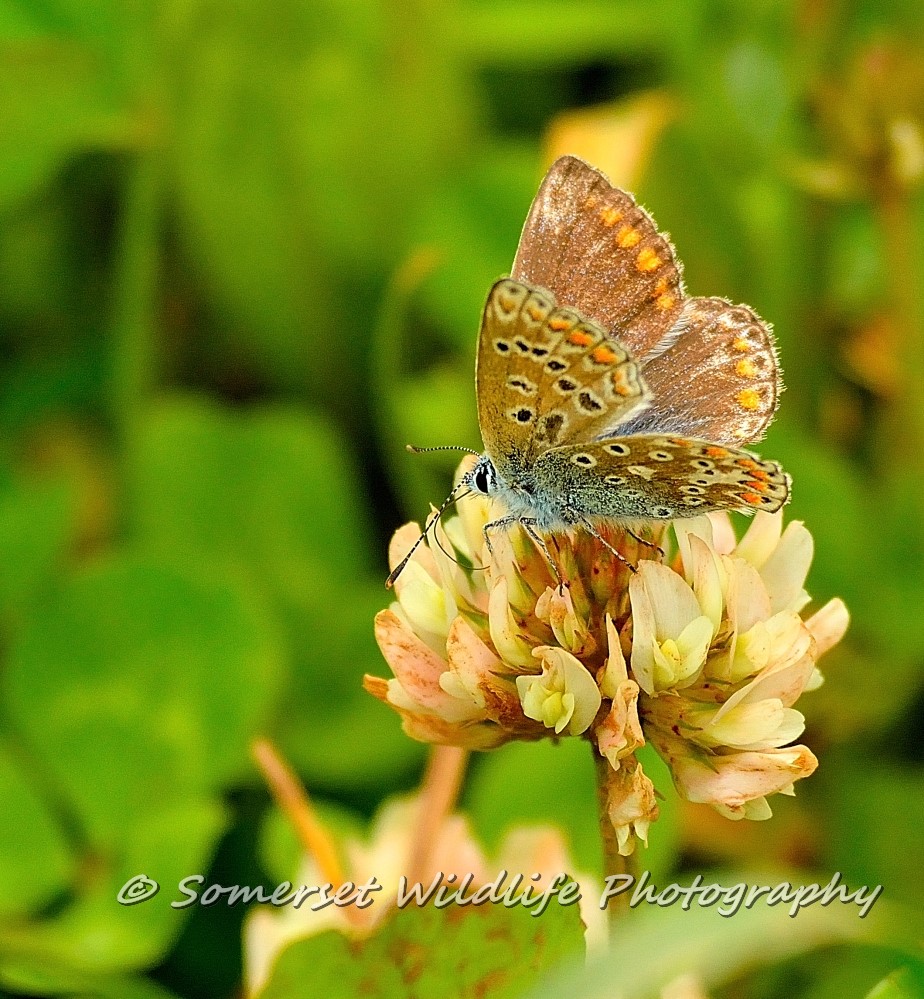
- NAME: Common Blue – Polyommatus icarus / WINGSPAN: 35mm / FLIGHT TIME: May-October / HABITAT: A wide variety of habitats, including unimproved grassland such as roadside verges and waste ground, downland, woodland clearings, heathland and even sand dunes / LARVAL FOODPLANT: The main larval foodplant is Common Bird’s-foot-trefoil (Lotus corniculatus), but Black Medick (Medicago lupulina), Common Restharrow (Ononis repens), Greater Bird’s-foot-trefoil (Lotus pedunculatus) and Lesser Trefoil (Trifolium dubium) are also used.
-

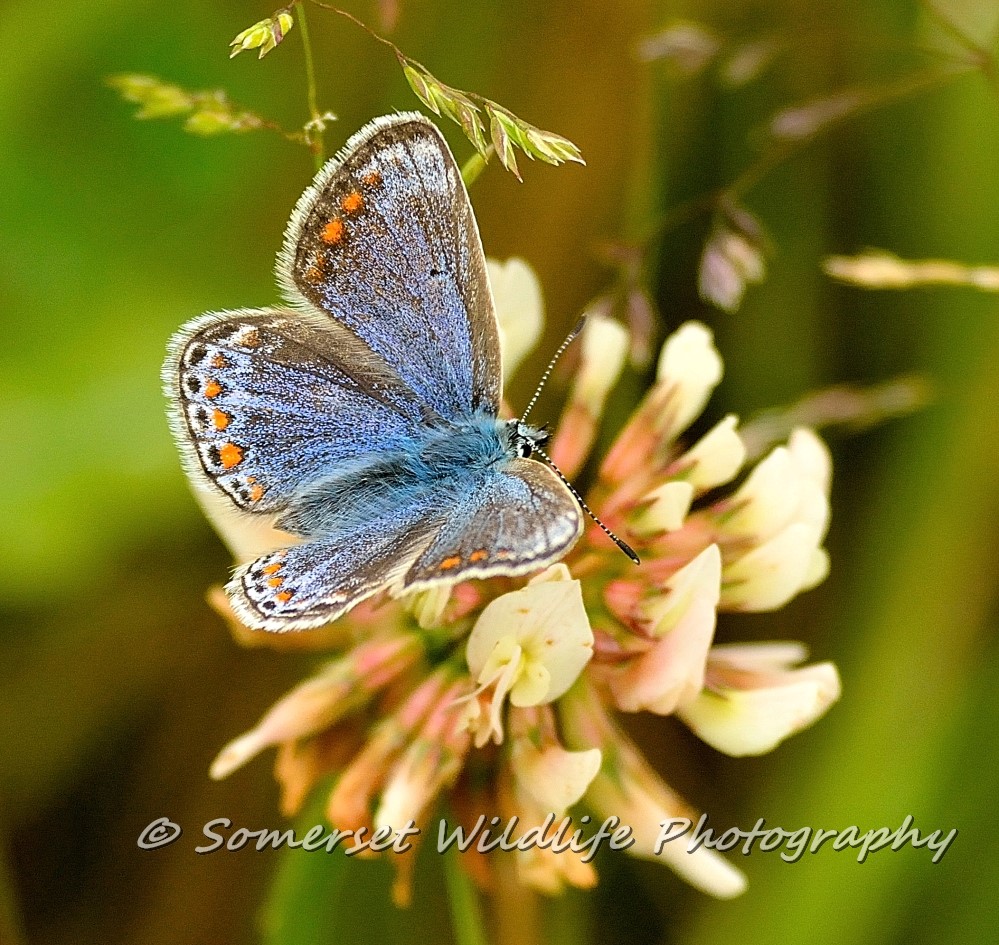
- NAME: Common Blue – Polyommatus icarus / WINGSPAN: 35mm / FLIGHT TIME: May-October / HABITAT: A wide variety of habitats, including unimproved grassland such as roadside verges and waste ground, downland, woodland clearings, heathland and even sand dunes / LARVAL FOODPLANT: The main larval foodplant is Common Bird’s-foot-trefoil (Lotus corniculatus), but Black Medick (Medicago lupulina), Common Restharrow (Ononis repens), Greater Bird’s-foot-trefoil (Lotus pedunculatus) and Lesser Trefoil (Trifolium dubium) are also used.
-
- NAME: Common Blue – Polyommatus icarus / WINGSPAN: 35mm / FLIGHT TIME: May-October / HABITAT: A wide variety of habitats, including unimproved grassland such as roadside verges and waste ground, downland, woodland clearings, heathland and even sand dunes / LARVAL FOODPLANT: The main larval foodplant is Common Bird’s-foot-trefoil (Lotus corniculatus), but Black Medick (Medicago lupulina), Common Restharrow (Ononis repens), Greater Bird’s-foot-trefoil (Lotus pedunculatus) and Lesser Trefoil (Trifolium dubium) are also used.

-

- NAME: Common Blue – Polyommatus icarus / WINGSPAN: 35mm / FLIGHT TIME: May-October / HABITAT: A wide variety of habitats, including unimproved grassland such as roadside verges and waste ground, downland, woodland clearings, heathland and even sand dunes / LARVAL FOODPLANT: The main larval foodplant is Common Bird’s-foot-trefoil (Lotus corniculatus), but Black Medick (Medicago lupulina), Common Restharrow (Ononis repens), Greater Bird’s-foot-trefoil (Lotus pedunculatus) and Lesser Trefoil (Trifolium dubium) are also used.

-
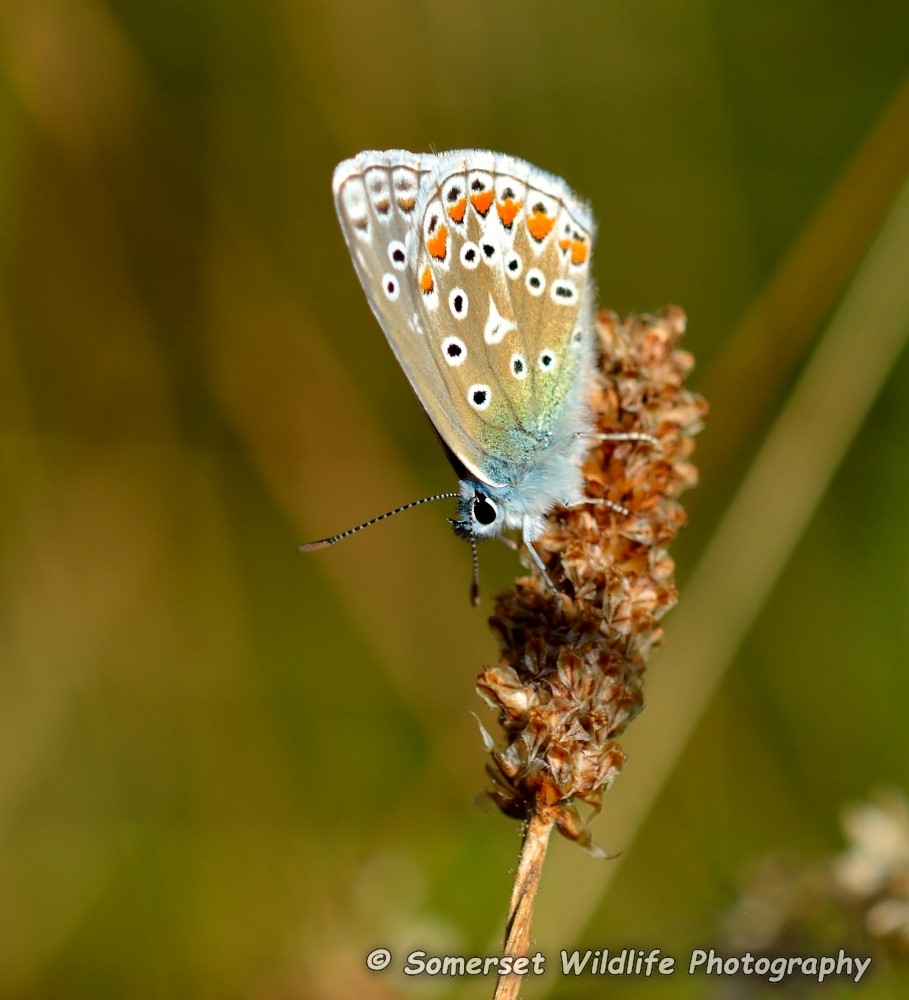
- NAME: Common Blue – Polyommatus icarus / WINGSPAN: 35mm / FLIGHT TIME: May-October / HABITAT: A wide variety of habitats, including unimproved grassland such as roadside verges and waste ground, downland, woodland clearings, heathland and even sand dunes / LARVAL FOODPLANT: The main larval foodplant is Common Bird’s-foot-trefoil (Lotus corniculatus), but Black Medick (Medicago lupulina), Common Restharrow (Ononis repens), Greater Bird’s-foot-trefoil (Lotus pedunculatus) and Lesser Trefoil (Trifolium dubium) are also used.
-
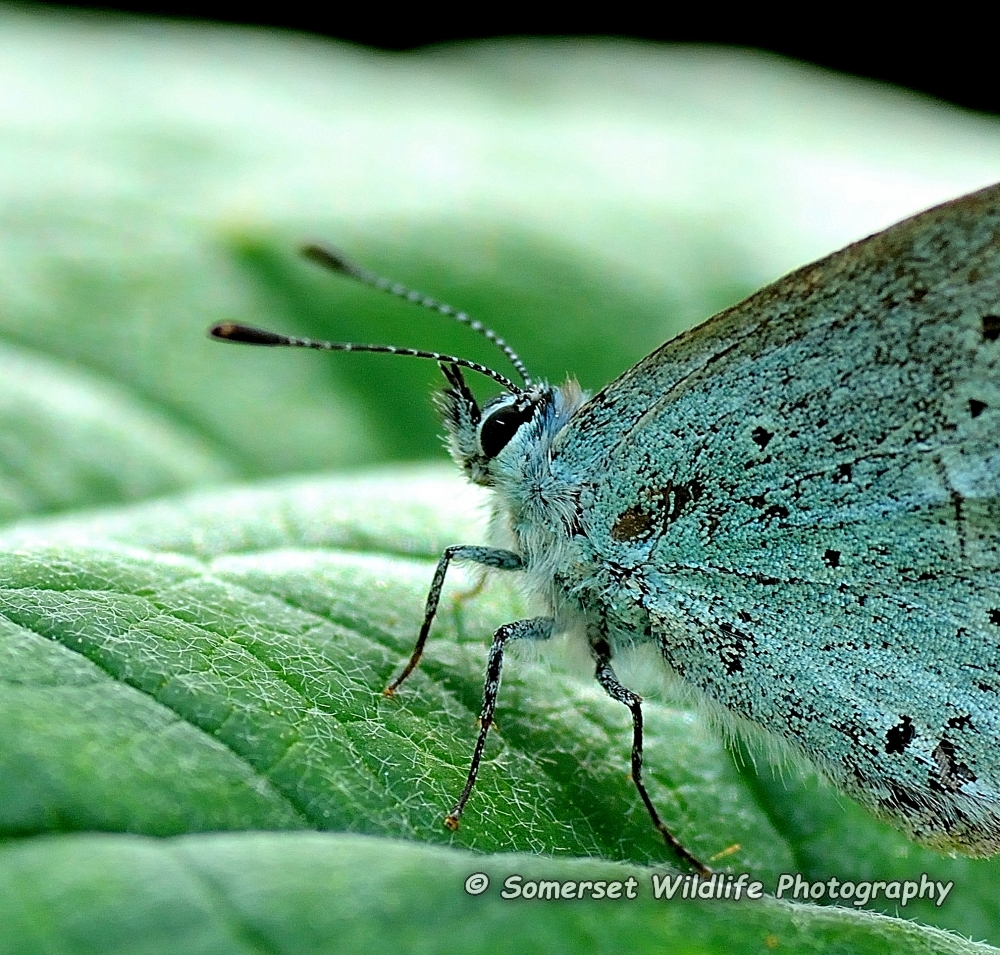
- NAME: Holly Blue – Celastrina argiolus / WINGSPAN: 35mm / FLIGHT TIME: April-September (two broods) / HABITAT: Various habitat, including gardens, churchyards, woodland, parks and anywhere its food plants and nectar sources can be found / LARVAL FOODPLANT: Holly (Ilex aquifolium) and Ivy (Hedera helix)

-
- NAME: Holly Blue – Celastrina argiolus / WINGSPAN: 35mm / FLIGHT TIME: April-September (two broods) / HABITAT: Various habitat, including gardens, churchyards, woodland, parks and anywhere its food plants and nectar sources can be found / LARVAL FOODPLANT: Holly (Ilex aquifolium) and Ivy (Hedera helix)

-
- NAME: Holly Blue – Celastrina argiolus / WINGSPAN: 35mm / FLIGHT TIME: April-September (two broods) / HABITAT: Various habitat, including gardens, churchyards, woodland, parks and anywhere its food plants and nectar sources can be found / LARVAL FOODPLANT: Holly (Ilex aquifolium) and Ivy (Hedera helix)
-
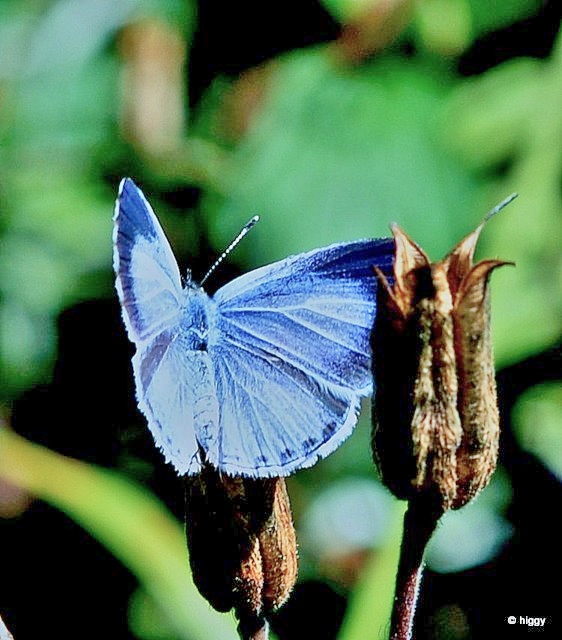
- NAME: Holly Blue – Celastrina argiolus / WINGSPAN: 35mm / FLIGHT TIME: April-September (two broods) / HABITAT: Various habitat, including gardens, churchyards, woodland, parks and anywhere its food plants and nectar sources can be found / LARVAL FOODPLANT: Holly (Ilex aquifolium) and Ivy (Hedera helix)
-

- NAME: Holly Blue – Celastrina argiolus / WINGSPAN: 35mm / FLIGHT TIME: April-September (two broods) / HABITAT: Various habitat, including gardens, churchyards, woodland, parks and anywhere its food plants and nectar sources can be found / LARVAL FOODPLANT: Holly (Ilex aquifolium) and Ivy (Hedera helix)

-
- NAME: Holly Blue – Celastrina argiolus / WINGSPAN: 35mm / FLIGHT TIME: April-September (two broods) / HABITAT: Various habitat, including gardens, churchyards, woodland, parks and anywhere its food plants and nectar sources can be found / LARVAL FOODPLANT: Holly (Ilex aquifolium) and Ivy (Hedera helix)

-
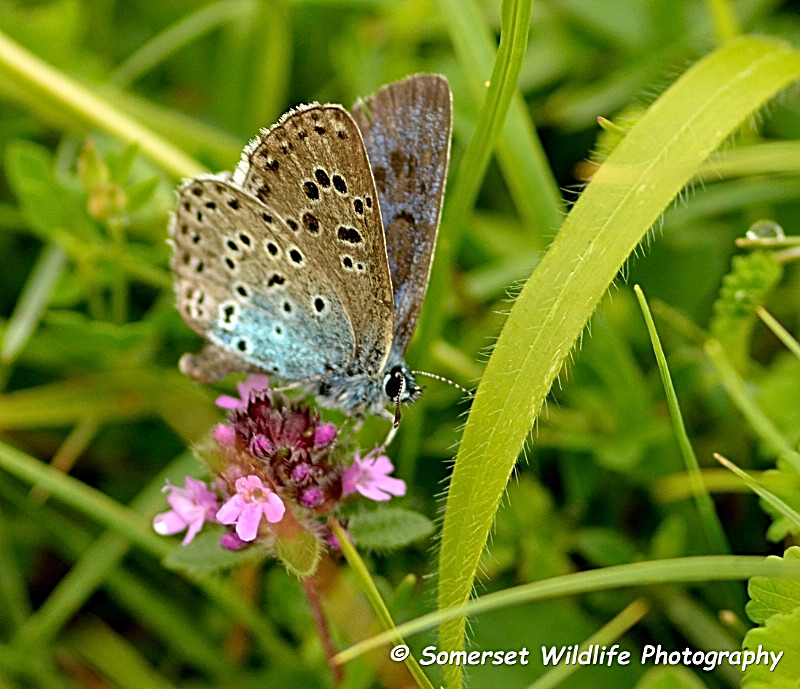
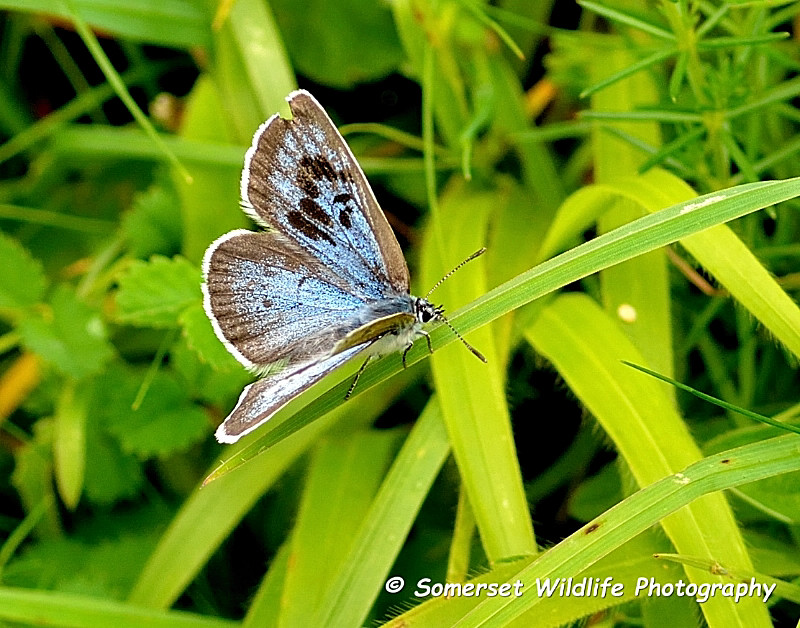
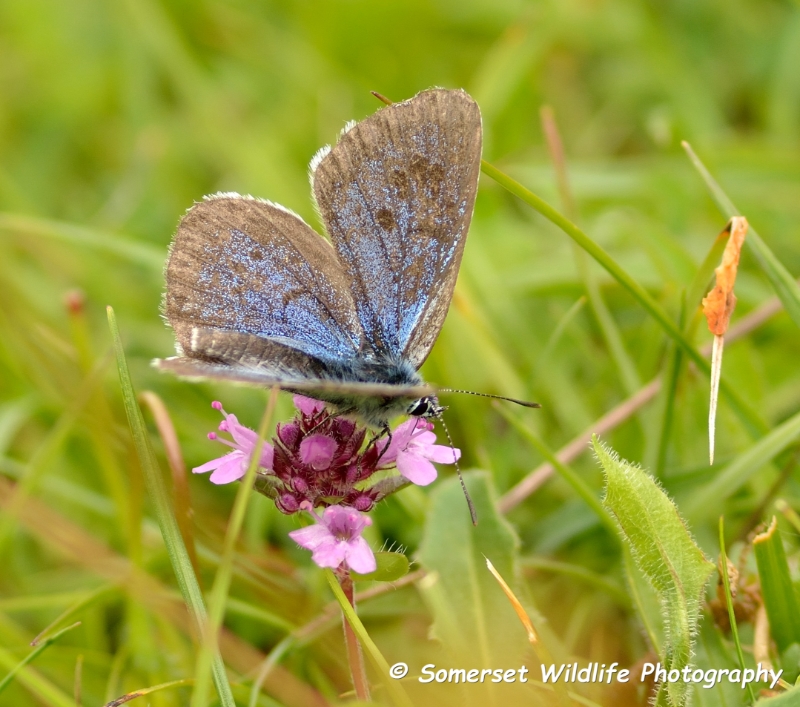
- NAME: Large Blue – Maculinea arion / WINGSPAN: 40-50mm / FLIGHT TIME: June-July / HABITAT: Warm and well-drained unimproved grasslands, usually acidic coastal grassland or limestone grassland only where the Myrmica red ants that it relies on nest / LARVAL FOODPLANT: Wild Thyme (Thymus polytrichus) but from their fourth instar they feed on ant grubs within the nests of the Myrmica red ants. Survival rates are highest within nests of Myrmica sabuleti and much poorer in those of M. scabrinodis. Eggs may be laid on Wild Marjoram (Origanum vulgare) but this usually flowers too late to be used on most British sites
-

- NAME: Large Blue – Maculinea arion / WINGSPAN: 40-50mm / FLIGHT TIME: June-July / HABITAT: Warm and well-drained unimproved grasslands, usually acidic coastal grassland or limestone grassland only where the Myrmica red ants that it relies on nest / LARVAL FOODPLANT: Wild Thyme (Thymus polytrichus) but from their fourth instar they feed on ant grubs within the nests of the Myrmica red ants. Survival rates are highest within nests of Myrmica sabuleti and much poorer in those of M. scabrinodis. Eggs may be laid on Wild Marjoram (Origanum vulgare) but this usually flowers too late to be used on most British sites
-
- NAME: Large Blue – Maculinea arion / WINGSPAN: 40-50mm / FLIGHT TIME: June-July / HABITAT: Warm and well-drained unimproved grasslands, usually acidic coastal grassland or limestone grassland only where the Myrmica red ants that it relies on nest / LARVAL FOODPLANT: Wild Thyme (Thymus polytrichus) but from their fourth instar they feed on ant grubs within the nests of the Myrmica red ants. Survival rates are highest within nests of Myrmica sabuleti and much poorer in those of M. scabrinodis. Eggs may be laid on Wild Marjoram (Origanum vulgare) but this usually flowers too late to be used on most British sites

-
- NAME: Large Blue – Maculinea arion / WINGSPAN: 40-50mm / FLIGHT TIME: June-July / HABITAT: Warm and well-drained unimproved grasslands, usually acidic coastal grassland or limestone grassland only where the Myrmica red ants that it relies on nest / LARVAL FOODPLANT: Wild Thyme (Thymus polytrichus) but from their fourth instar they feed on ant grubs within the nests of the Myrmica red ants. Survival rates are highest within nests of Myrmica sabuleti and much poorer in those of M. scabrinodis. Eggs may be laid on Wild Marjoram (Origanum vulgare) but this usually flowers too late to be used on most British sites
-
- NAME: White Admiral – Limenitis Camilla / WINGSPAN: 60-64mm / FLIGHT TIME: June-Aug / HABITAT: Shady woodland and ride edges and is often associated with neglected or mature woodland, where there are sunny glades with large patches of Bramble to provide nectar for the adults. It is found in both deciduous and

-
- NAME: White Admiral – Limenitis Camilla / WINGSPAN: 60-64mm / FLIGHT TIME: June-Aug / HABITAT: Shady woodland and ride edges and is often associated with neglected or mature woodland, where there are sunny glades with large patches of Bramble to provide nectar for the adults. It is found in both deciduous and
-
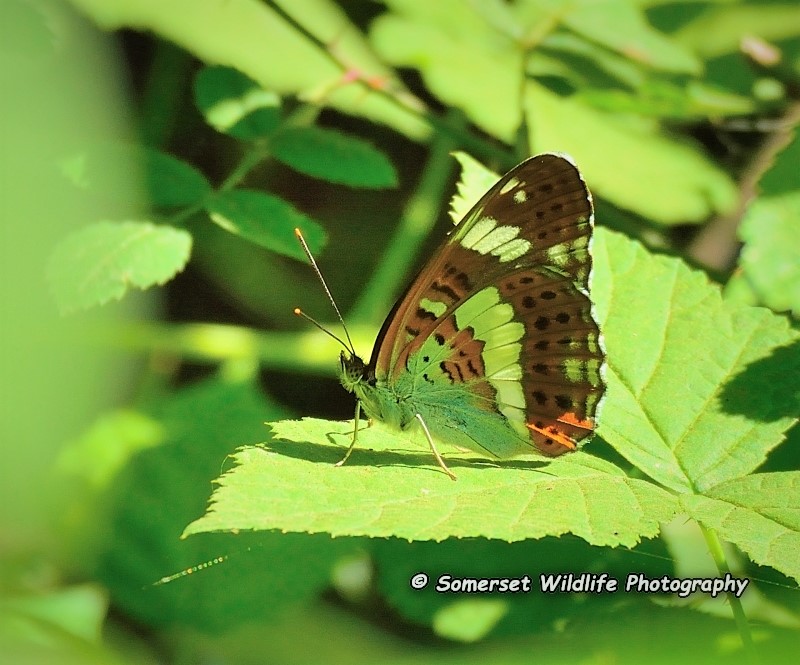
- NAME: White Admiral – Limenitis Camilla / WINGSPAN: 60-64mm / FLIGHT TIME: June-Aug / HABITAT: Shady woodland and ride edges and is often associated with neglected or mature woodland, where there are sunny glades with large patches of Bramble to provide nectar for the adults. It is found in both deciduous and

-
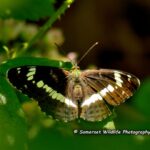
- NAME: White Admiral – Limenitis Camilla / WINGSPAN: 60-64mm / FLIGHT TIME: June-Aug / HABITAT: Shady woodland and ride edges and is often associated with neglected or mature woodland, where there are sunny glades with large patches of Bramble to provide nectar for the adults. It is found in both deciduous and

-
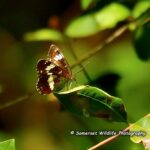
- NAME: White Admiral – Limenitis Camilla / WINGSPAN: 60-64mm / FLIGHT TIME: June-Aug / HABITAT: Shady woodland and ride edges and is often associated with neglected or mature woodland, where there are sunny glades with large patches of Bramble to provide nectar for the adults. It is found in both deciduous and

-
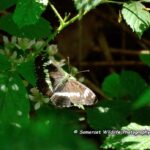
- NAME: White Admiral – Limenitis Camilla / WINGSPAN: 60-64mm / FLIGHT TIME: June-Aug / HABITAT: Shady woodland and ride edges and is often associated with neglected or mature woodland, where there are sunny glades with large patches of Bramble to provide nectar for the adults. It is found in both deciduous and

-
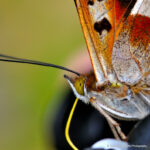
- NAME: Purple Emperor – Apatura iris / WINGSPAN: 75-84mm / FLIGHT TIME: July-August / HABITAT: Found in large blocks of broadleaved woodland or clusters of smaller woods and/or dense scrub with a good supply of willow / LARVAL FOODPLANT: Goat Willow (Salix caprea) is the most widely used foodplant although it breeds on Grey Willow (S.cinerea) and more rarely Crack- Willow (S. fragilis). Eggs are laid on a wide range of tree sizes, ranging from medium sized shrubs to tall canopy trees.

-
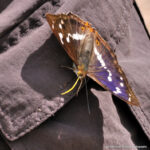
- NAME: Purple Emperor – Apatura iris / WINGSPAN: 75-84mm / FLIGHT TIME: July-August / HABITAT: Found in large blocks of broadleaved woodland or clusters of smaller woods and/or dense scrub with a good supply of willow / LARVAL FOODPLANT: Goat Willow (Salix caprea) is the most widely used foodplant although it breeds on Grey Willow (S.cinerea) and more rarely Crack- Willow (S. fragilis). Eggs are laid on a wide range of tree sizes, ranging from medium sized shrubs to tall canopy trees.

-
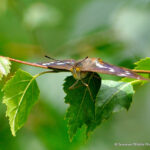
- NAME: Purple Emperor – Apatura iris / WINGSPAN: 75-84mm / FLIGHT TIME: July-August / HABITAT: Found in large blocks of broadleaved woodland or clusters of smaller woods and/or dense scrub with a good supply of willow / LARVAL FOODPLANT: Goat Willow (Salix caprea) is the most widely used foodplant although it breeds on Grey Willow (S.cinerea) and more rarely Crack- Willow (S. fragilis). Eggs are laid on a wide range of tree sizes, ranging from medium sized shrubs to tall canopy trees.

-
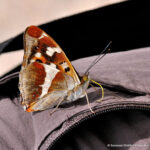
- NAME: Purple Emperor – Apatura iris / WINGSPAN: 75-84mm / FLIGHT TIME: July-August / HABITAT: Found in large blocks of broadleaved woodland or clusters of smaller woods and/or dense scrub with a good supply of willow / LARVAL FOODPLANT: Goat Willow (Salix caprea) is the most widely used foodplant although it breeds on Grey Willow (S.cinerea) and more rarely Crack- Willow (S. fragilis). Eggs are laid on a wide range of tree sizes, ranging from medium sized shrubs to tall canopy trees.

-
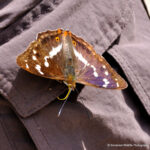
- NAME: Purple Emperor – Apatura iris / WINGSPAN: 75-84mm / FLIGHT TIME: July-August / HABITAT: Found in large blocks of broadleaved woodland or clusters of smaller woods and/or dense scrub with a good supply of willow / LARVAL FOODPLANT: Goat Willow (Salix caprea) is the most widely used foodplant although it breeds on Grey Willow (S.cinerea) and more rarely Crack- Willow (S. fragilis). Eggs are laid on a wide range of tree sizes, ranging from medium sized shrubs to tall canopy trees.

-

- NAME: Purple Emperor – Apatura iris / WINGSPAN: 75-84mm / FLIGHT TIME: July-August / HABITAT: Found in large blocks of broadleaved woodland or clusters of smaller woods and/or dense scrub with a good supply of willow / LARVAL FOODPLANT: Goat Willow (Salix caprea) is the most widely used foodplant although it breeds on Grey Willow (S.cinerea) and more rarely Crack- Willow (S. fragilis). Eggs are laid on a wide range of tree sizes, ranging from medium sized shrubs to tall canopy trees.

-
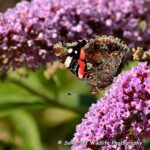
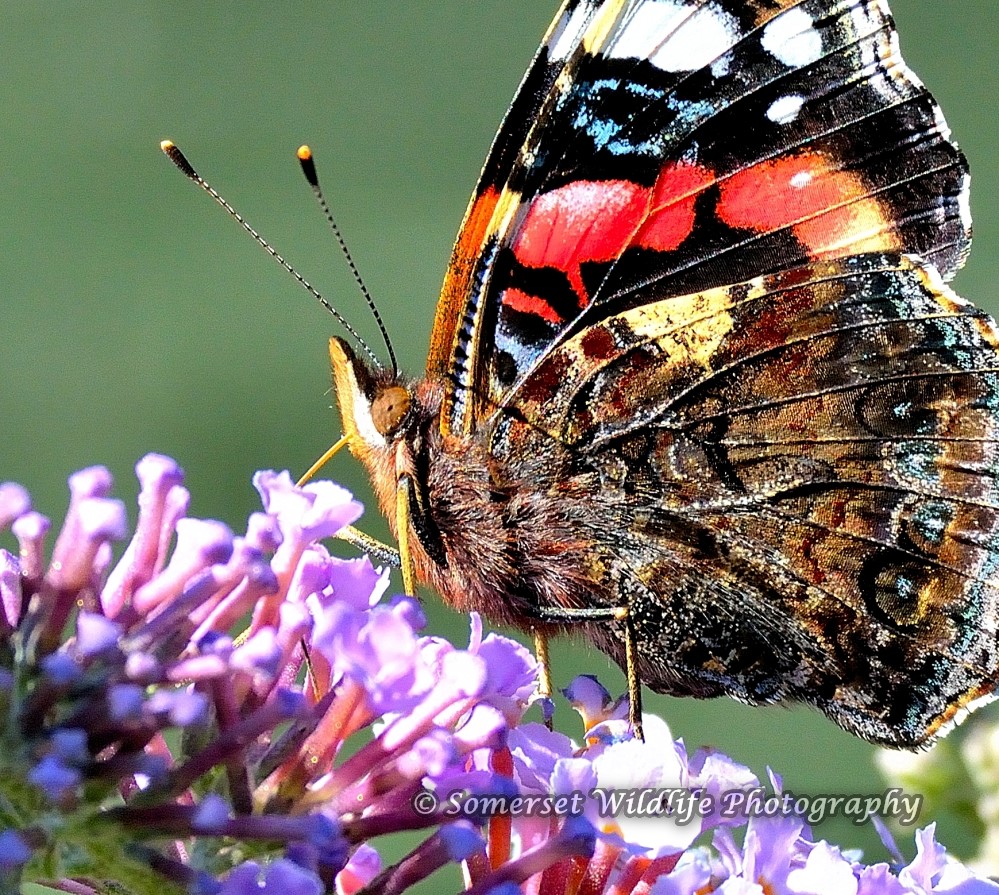
- NAME: Red Admiral – Vanessa atalanta / WINGSPAN: 65mm / FLIGHT TIME: Throughout the year but mainly March-October / HABITAT: Found almost anywhere / LARVAL FOODPLANT: Common Nettle

-
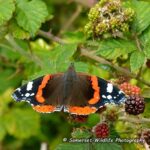
- NAME: Red Admiral – Vanessa atalanta / WINGSPAN: 65mm / FLIGHT TIME: Throughout the year but mainly March-October / HABITAT: Found almost anywhere / LARVAL FOODPLANT: Common Nettle

-
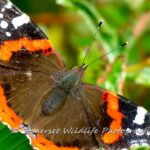
- NAME: Red Admiral – Vanessa atalanta / WINGSPAN: 65mm / FLIGHT TIME: Throughout the year but mainly March-October / HABITAT: Found almost anywhere / LARVAL FOODPLANT: Common Nettle

-
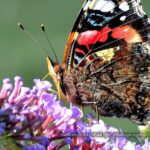
- NAME: Red Admiral – Vanessa atalanta / WINGSPAN: 65mm / FLIGHT TIME: Throughout the year but mainly March-October / HABITAT: Found almost anywhere / LARVAL FOODPLANT: Common Nettle
-
- NAME: Red Admiral – Vanessa atalanta / WINGSPAN: 65mm / FLIGHT TIME: Throughout the year but mainly March-October / HABITAT: Found almost anywhere / LARVAL FOODPLANT: Common Nettle

-
- NAME: Red Admiral – Vanessa atalanta / WINGSPAN: 65mm / FLIGHT TIME: Throughout the year but mainly March-October / HABITAT: Found almost anywhere / LARVAL FOODPLANT: Common Nettle

-
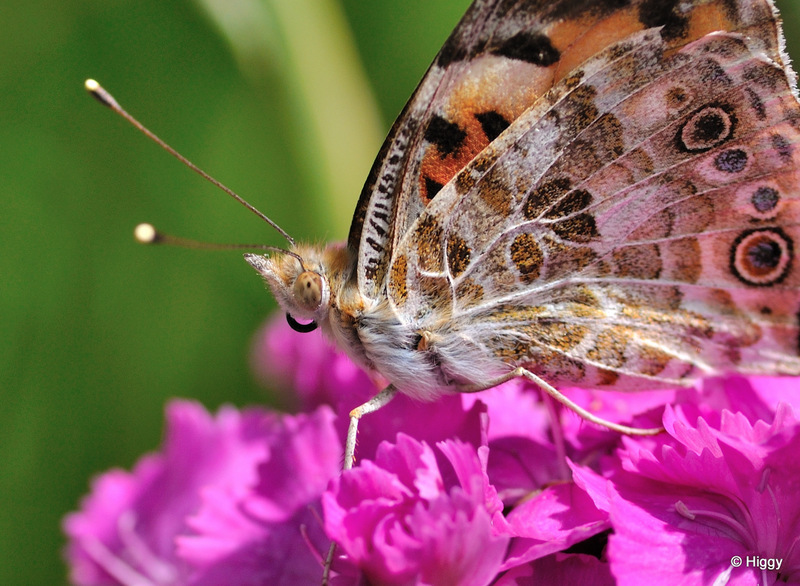
- NAME: Painted Lady – Vanessa cardui / WINGSPAN: 50-56mm / FLIGHT TIME: Migrant from march-October / HABITAT: dry open areas but can be seen anywhere in a good year / LARVAL FOODPLANT: The most widely used foodplant is Common Nettle (Urtica dioica). Other species used include Hop (Humulus lupulus), elms (Ulmus spp.), currants (Ribes spp.), and Willows (Salix spp).
-
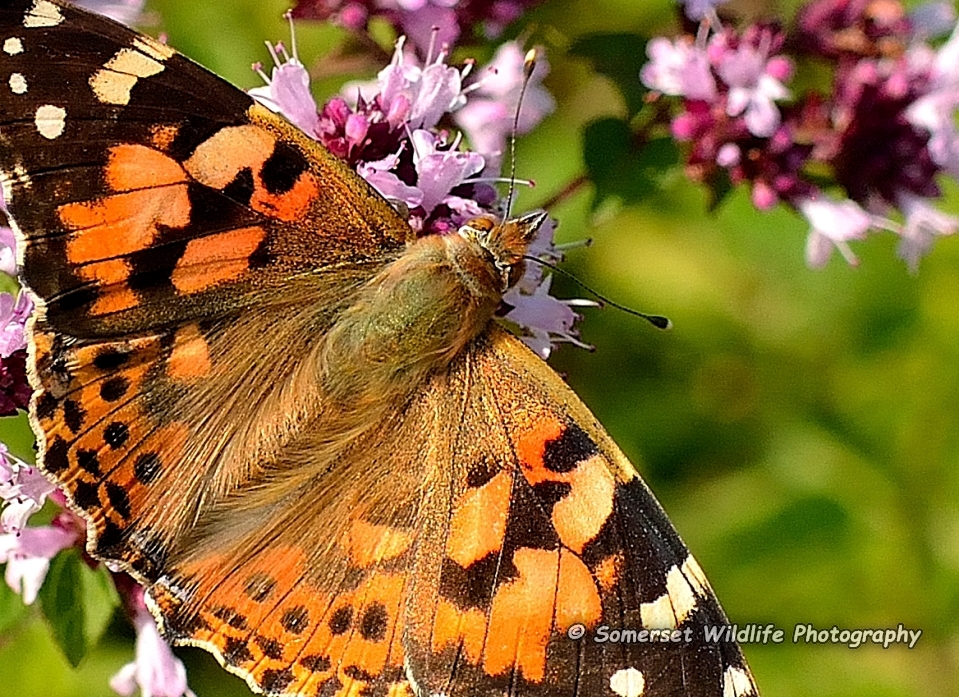
- NAME: Painted Lady – Vanessa cardui / WINGSPAN: 50-56mm / FLIGHT TIME: Migrant from march-October / HABITAT: dry open areas but can be seen anywhere in a good year / LARVAL FOODPLANT: The most widely used foodplant is Common Nettle (Urtica dioica). Other species used include Hop (Humulus lupulus), elms (Ulmus spp.), currants (Ribes spp.), and Willows (Salix spp).
-
- NAME: Painted Lady – Vanessa cardui / WINGSPAN: 50-56mm / FLIGHT TIME: Migrant from march-October / HABITAT: dry open areas but can be seen anywhere in a good year / LARVAL FOODPLANT: The most widely used foodplant is Common Nettle (Urtica dioica). Other species used include Hop (Humulus lupulus), elms (Ulmus spp.), currants (Ribes spp.), and Willows (Salix spp).

-
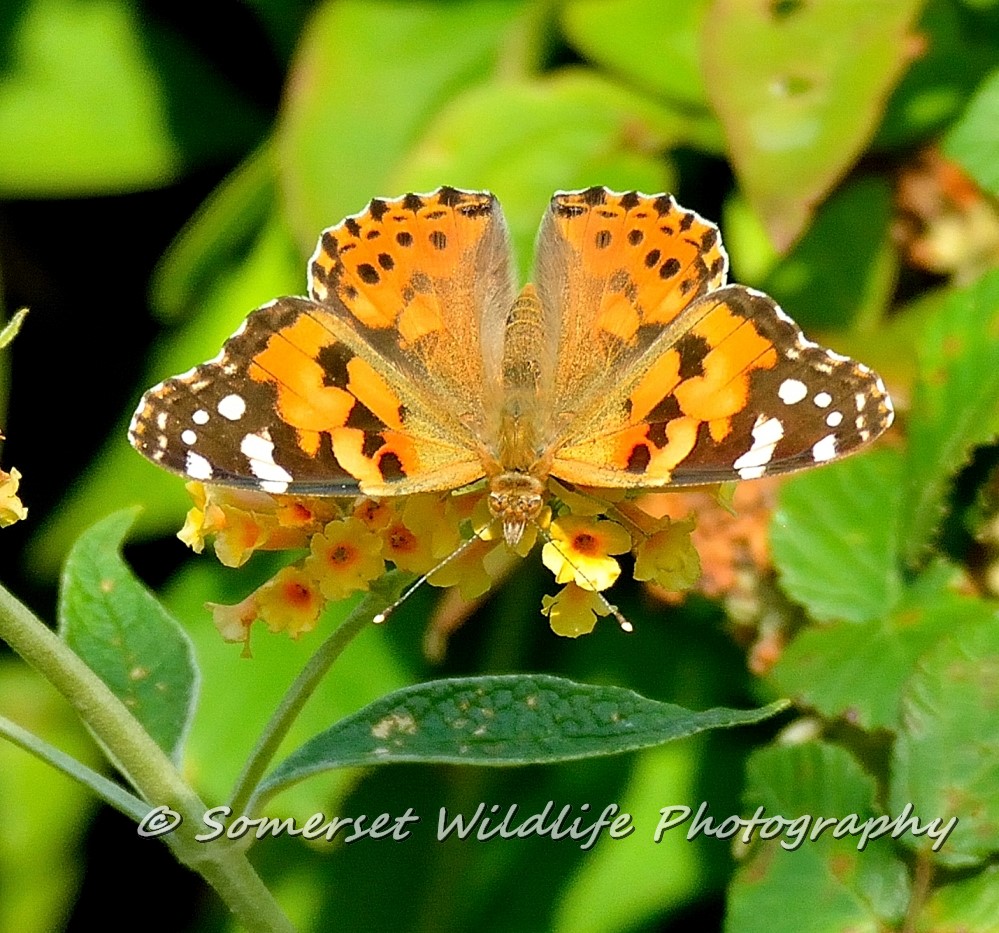
- NAME: Painted Lady – Vanessa cardui / WINGSPAN: 50-56mm / FLIGHT TIME: Migrant from march-October / HABITAT: dry open areas but can be seen anywhere in a good year / LARVAL FOODPLANT: The most widely used foodplant is Common Nettle (Urtica dioica). Other species used include Hop (Humulus lupulus), elms (Ulmus spp.), currants (Ribes spp.), and Willows (Salix spp).
-
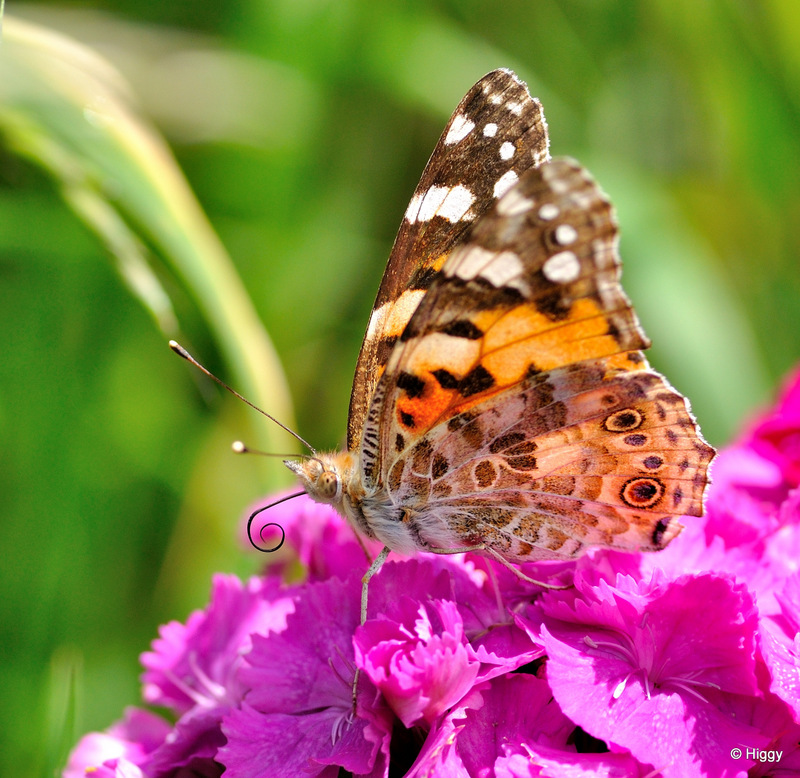
- NAME: Painted Lady – Vanessa cardui / WINGSPAN: 50-56mm / FLIGHT TIME: Migrant from march-October / HABITAT: dry open areas but can be seen anywhere in a good year / LARVAL FOODPLANT: The most widely used foodplant is Common Nettle (Urtica dioica). Other species used include Hop (Humulus lupulus), elms (Ulmus spp.), currants (Ribes spp.), and Willows (Salix spp).
-
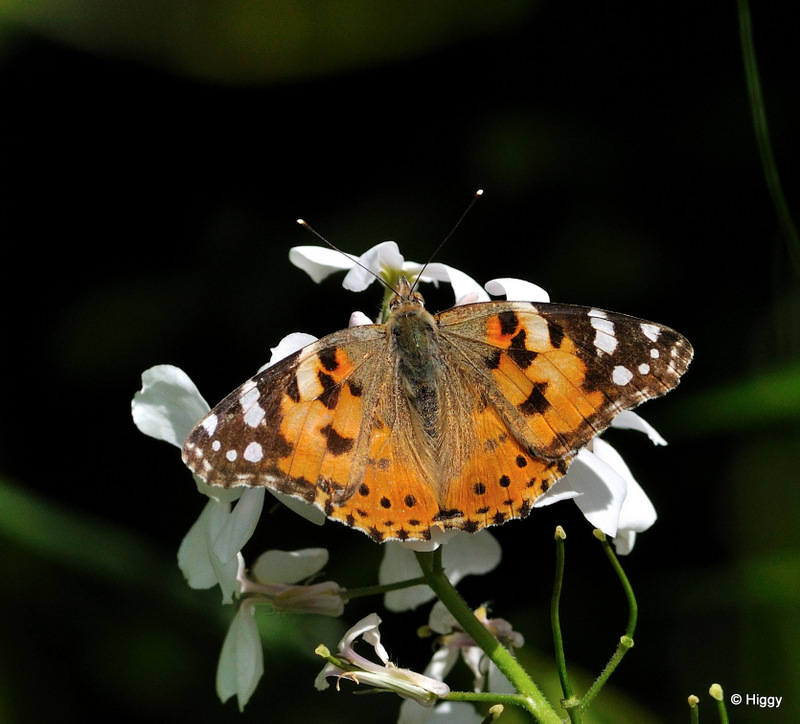
- NAME: Painted Lady – Vanessa cardui / WINGSPAN: 50-56mm / FLIGHT TIME: Migrant from march-October / HABITAT: dry open areas but can be seen anywhere in a good year / LARVAL FOODPLANT: The most widely used foodplant is Common Nettle (Urtica dioica). Other species used include Hop (Humulus lupulus), elms (Ulmus spp.), currants (Ribes spp.), and Willows (Salix spp).
-
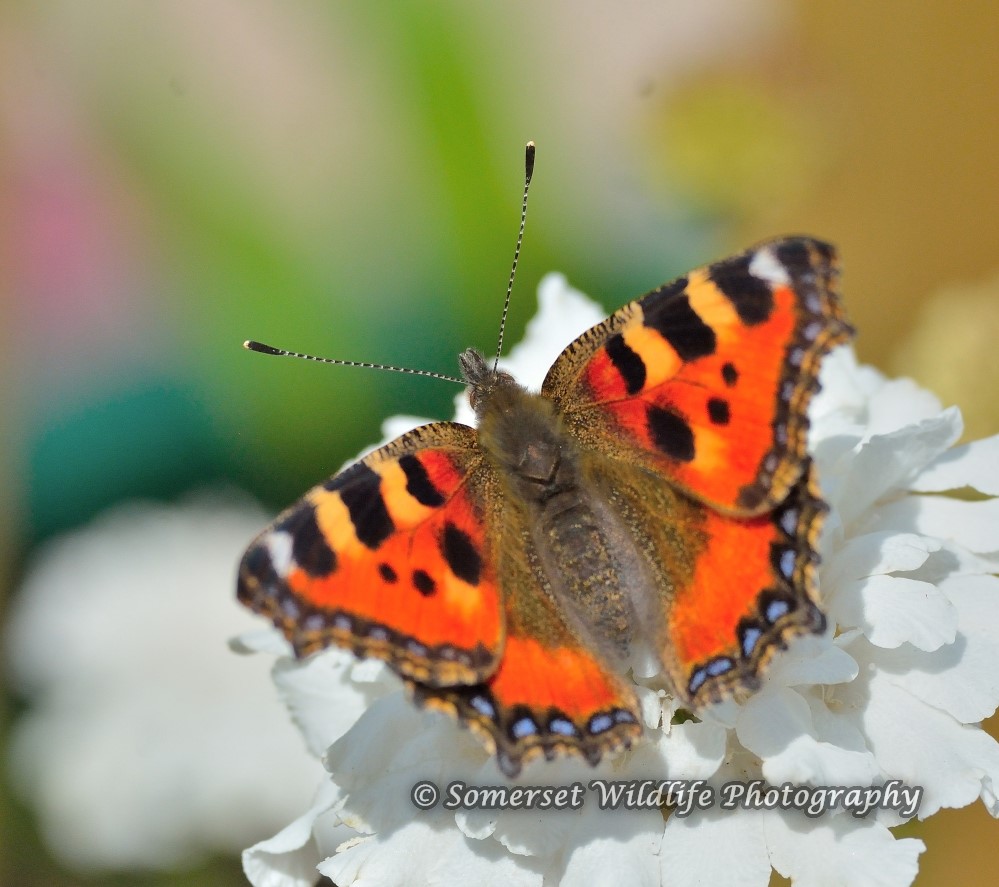
- NAME: Small Tortoiseshell – Aglais urticae / WINGSPAN: 50-56mm / FLIGHT TIME: Can be seen all year / HABITAT: Wide variety of habitats / LARVAL FOODPLANT: Common Nettle

-
- NAME: Small Tortoiseshell – Aglais urticae / WINGSPAN: 50-56mm / FLIGHT TIME: Can be seen all year / HABITAT: Wide variety of habitats / LARVAL FOODPLANT: Common Nettle
-
- NAME: Small Tortoiseshell – Aglais urticae / WINGSPAN: 50-56mm / FLIGHT TIME: Can be seen all year / HABITAT: Wide variety of habitats / LARVAL FOODPLANT: Common Nettle

-

- NAME: Small Tortoiseshell – Aglais urticae / WINGSPAN: 50-56mm / FLIGHT TIME: Can be seen all year / HABITAT: Wide variety of habitats / LARVAL FOODPLANT: Common Nettle

-

- NAME: Small Tortoiseshell – Aglais urticae / WINGSPAN: 50-56mm / FLIGHT TIME: Can be seen all year / HABITAT: Wide variety of habitats / LARVAL FOODPLANT: Common Nettle

-
- NAME: Small Tortoiseshell – Aglais urticae / WINGSPAN: 50-56mm / FLIGHT TIME: Can be seen all year / HABITAT: Wide variety of habitats / LARVAL FOODPLANT: Common Nettle

-
- NAME: Small Tortoiseshell – Aglais urticae / WINGSPAN: 50-56mm / FLIGHT TIME: Can be seen all year / HABITAT: Wide variety of habitats / LARVAL FOODPLANT: Common Nettle

-
- NAME: Peacock – Aglais io / WINGSPAN: 63-69mm / FLIGHT TIME: June-juy / HABITAT: Large variety of habitats / LARVAL FOODPLANT: Common Nettle (Urtica dioica), although eggs and larvae are occasionally reported on Small Nettle (U. urens) and Hop (Humulus lupulus).

-
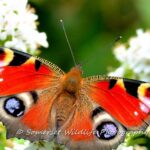
- NAME: Peacock – Aglais io / WINGSPAN: 63-69mm / FLIGHT TIME: June-juy / HABITAT: Large variety of habitats / LARVAL FOODPLANT: Common Nettle (Urtica dioica), although eggs and larvae are occasionally reported on Small Nettle (U. urens) and Hop (Humulus lupulus).

-

- NAME: Peacock – Aglais io / WINGSPAN: 63-69mm / FLIGHT TIME: June-juy / HABITAT: Large variety of habitats / LARVAL FOODPLANT: Common Nettle (Urtica dioica), although eggs and larvae are occasionally reported on Small Nettle (U. urens) and Hop (Humulus lupulus).

-

- NAME: Peacock – Aglais io / WINGSPAN: 63-69mm / FLIGHT TIME: June-juy / HABITAT: Large variety of habitats / LARVAL FOODPLANT: Common Nettle (Urtica dioica), although eggs and larvae are occasionally reported on Small Nettle (U. urens) and Hop (Humulus lupulus).

-
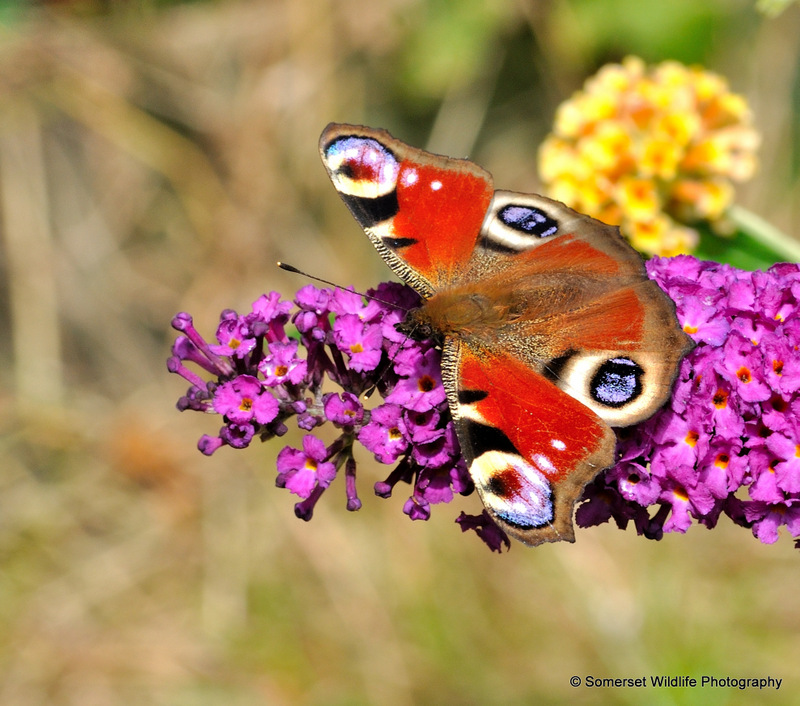
- NAME: Peacock – Aglais io / WINGSPAN: 63-69mm / FLIGHT TIME: June-juy / HABITAT: Large variety of habitats / LARVAL FOODPLANT: Common Nettle (Urtica dioica), although eggs and larvae are occasionally reported on Small Nettle (U. urens) and Hop (Humulus lupulus).
-
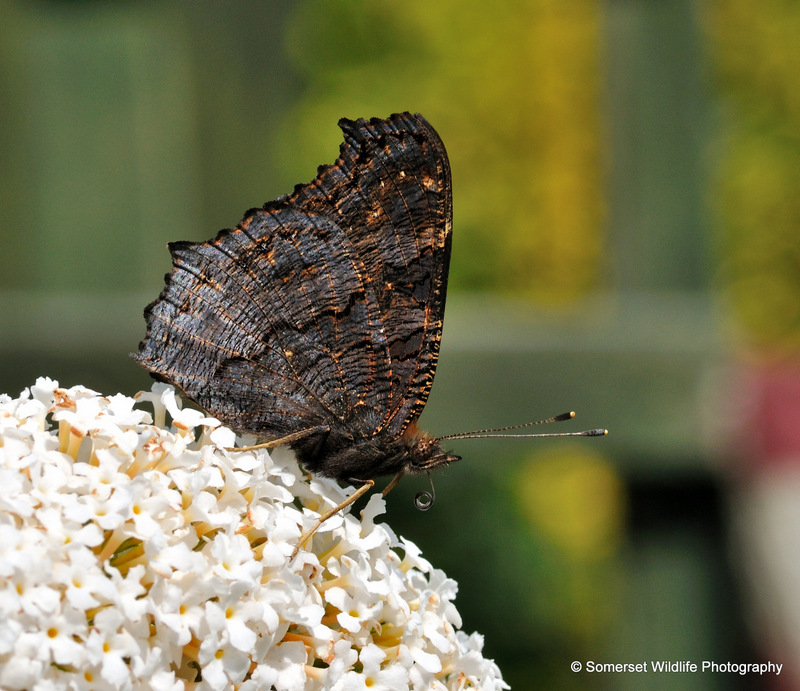
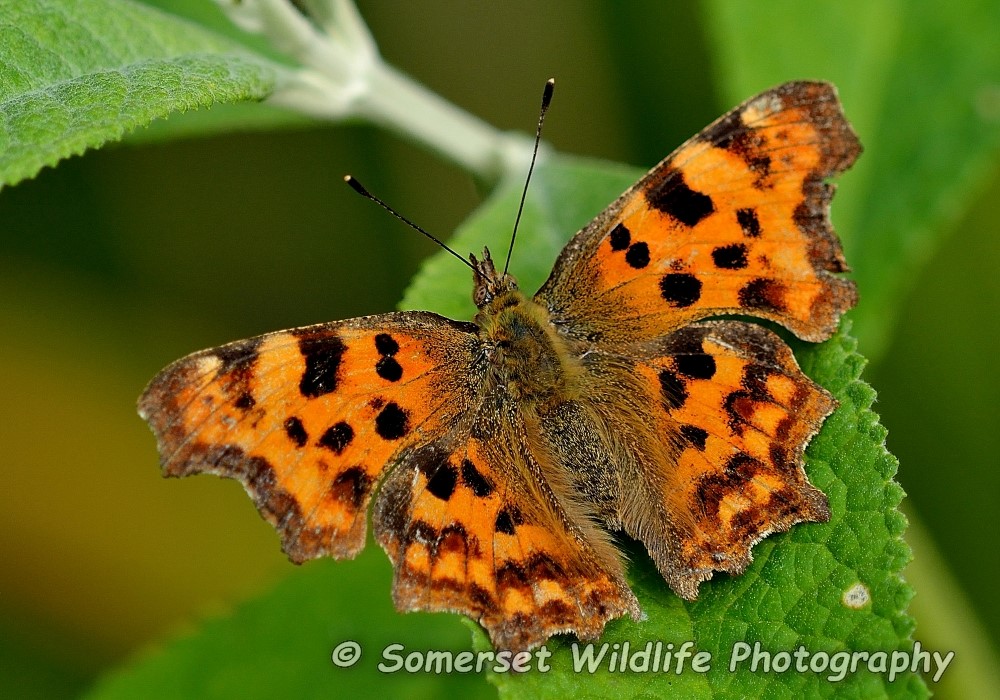
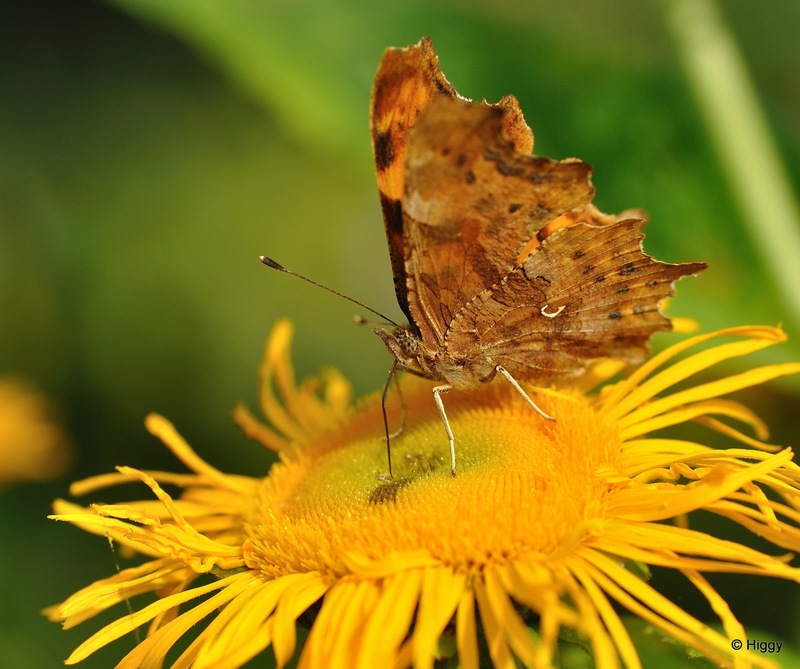
- NAME: Comma (Polygonia c-album) / WINGSPAN: 55-60mm / FLIGHT TIME: June-Aug / HABITAT: Open woodland and wood edges are the main breeding and hibernating habitats / LARVAL FOODPLANT: The most widely used foodplant is Common Nettle (Urtica dioica). Other species used include Hop (Humulus lupulus), elms (Ulmus spp.), currants (Ribes spp.), and Willows (Salix spp).
-
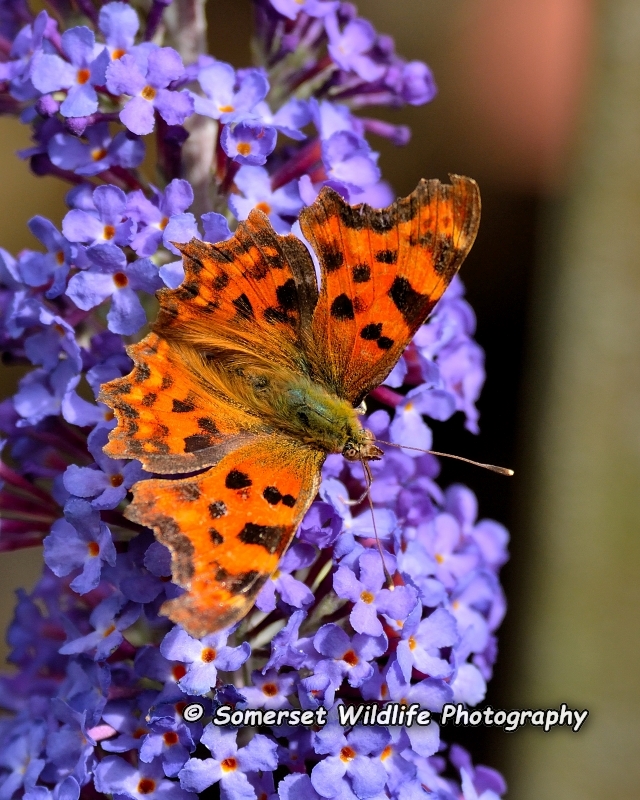
- NAME: Comma (Polygonia c-album) / WINGSPAN: 55-60mm / FLIGHT TIME: June-Aug / HABITAT: Open woodland and wood edges are the main breeding and hibernating habitats / LARVAL FOODPLANT: The most widely used foodplant is Common Nettle (Urtica dioica). Other species used include Hop (Humulus lupulus), elms (Ulmus spp.), currants (Ribes spp.), and Willows (Salix spp).
-
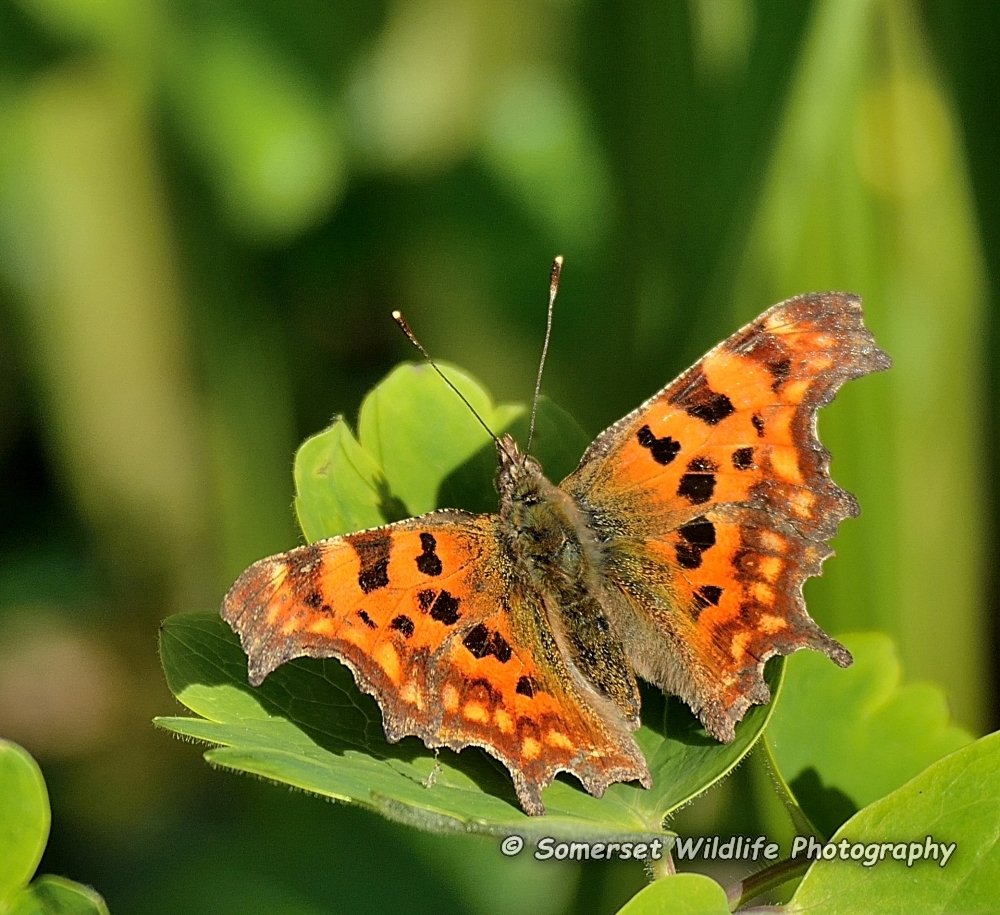
- NAME: Comma (Polygonia c-album) / WINGNAME: Comma (Polygonia c-album) / WINGSPAN: 55-60mm / FLIGHT TIME: June-Aug / HABITAT: Open woodland and wood edges are the main breeding and hibernating habitats / LARVAL FOODPLANT: The most widely used foodplant is Common Nettle (Urtica dioica). Other species used include Hop (Humulus lupulus), elms (Ulmus spp.), currants (Ribes spp.), and Willows (Salix spp).
-
- NAME: Comma (Polygonia c-album) / WINGSPAN: 55-60mm / FLIGHT TIME: June-Aug / HABITAT: Almost any time of the year / LARVAL FOODPLANT: The most widely used foodplant is Common Nettle (Urtica dioica). Other species used include Hop (Humulus lupulus), elms (Ulmus spp.), currants (Ribes spp.), and Willows (Salix spp).
-
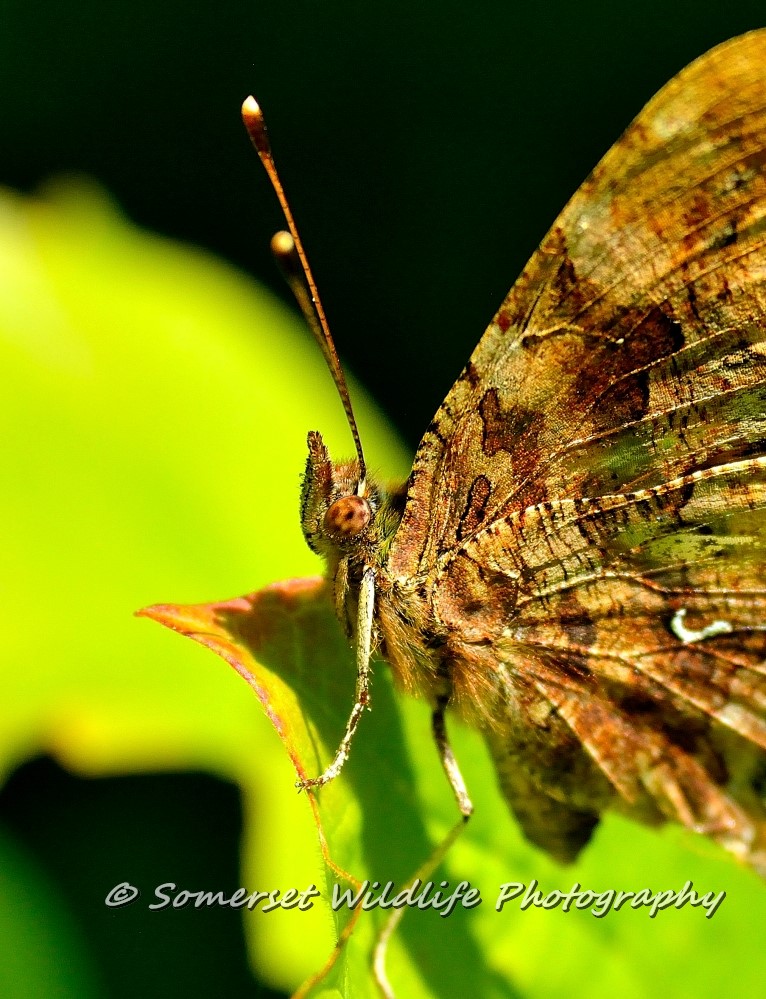
- NAME: Comma (Polygonia c-album) / WINGSPAN: 55-60mm / FLIGHT TIME: June-Aug / HABITAT: Open woodland and wood edges are the main breeding and hibernating habitats / LARVAL FOODPLANT: The most widely used foodplant is Common Nettle (Urtica dioica). Other species used include Hop (Humulus lupulus), elms (Ulmus spp.), currants (Ribes spp.), and Willows (Salix spp).
-
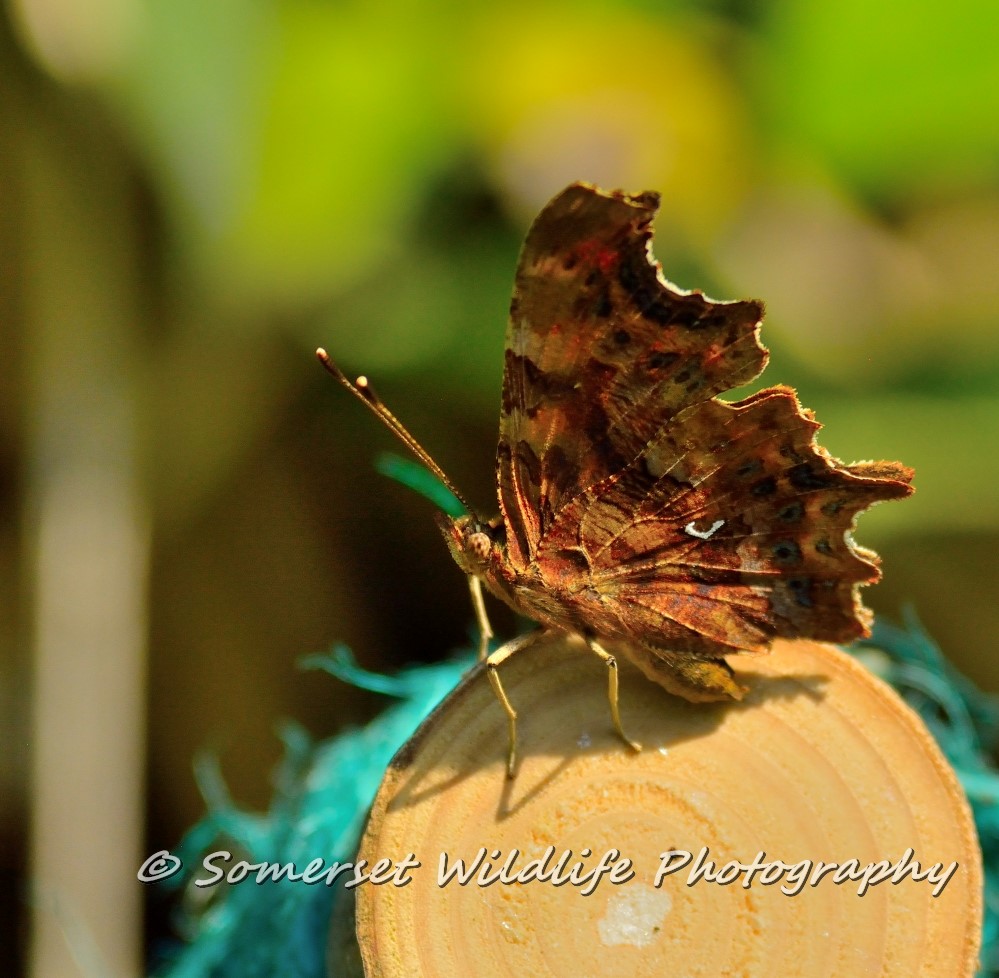
- NAME: Comma (Polygonia c-album) / WINGSPAN: 55-60mm / FLIGHT TIME: June-Aug / HABITAT: Open woodland and wood edges are the main breeding and hibernating habitats / LARVAL FOODPLANT: The most widely used foodplant is Common Nettle (Urtica dioica). Other species used include Hop (Humulus lupulus), elms (Ulmus spp.), currants (Ribes spp.), and Willows (Salix spp).
-
- NAME: Dark Green Fritillary – Argynnis aglaja / WINGSPAN: 63-69mm / FLIGHT TIME: June-Aug / HABITAT: Large variety of habitats / LARVAL FOODPLANT: Flower-rich grasslands often with patches of scrub, including coastal grassland, dunes and scrub; chalk and limestone grassland; moorland and wet flushes; acid grassland with bracken; and occasionally woodland rides and clearings.

-
- NAME: Dark Green Fritillary – Argynnis aglaja / WINGSPAN: 63-69mm / FLIGHT TIME: June-Aug / HABITAT: Large variety of habitats / LARVAL FOODPLANT: Flower-rich grasslands often with patches of scrub, including coastal grassland, dunes and scrub; chalk and limestone grassland; moorland and wet flushes; acid grassland with bracken; and occasionally woodland rides and clearings.
-
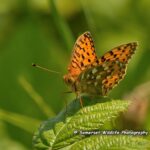
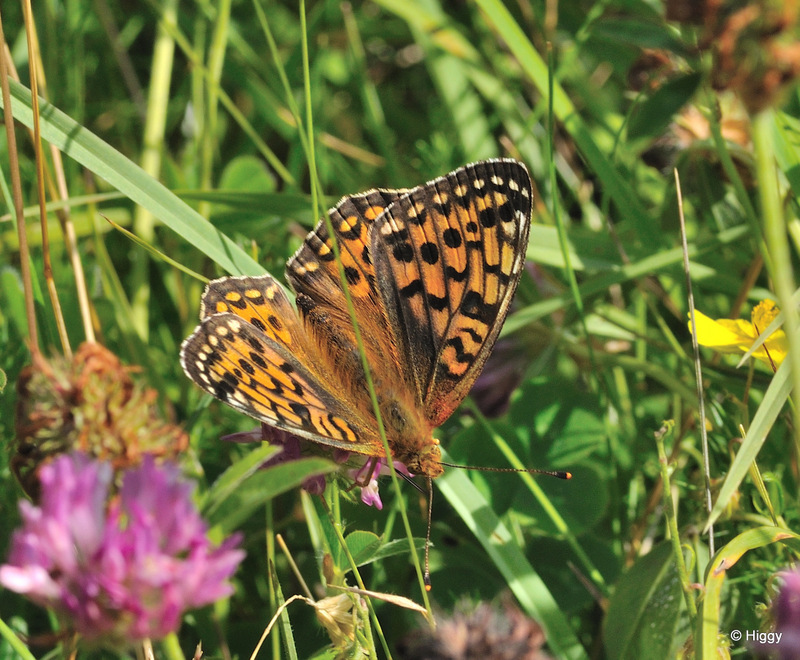
- NAME: Dark Green Fritillary – Argynnis aglaja / WINGSPAN: 63-69mm / FLIGHT TIME: June-Aug / HABITAT: Large variety of habitats / LARVAL FOODPLANT: Flower-rich grasslands often with patches of scrub, including coastal grassland, dunes and scrub; chalk and limestone grassland; moorland and wet flushes; acid grassland with bracken; and occasionally woodland rides and clearings.

-

- NAME: Dark Green Fritillary – Argynnis aglaja / WINGSPAN: 63-69mm / FLIGHT TIME: June-Aug / HABITAT: Large variety of habitats / LARVAL FOODPLANT: Flower-rich grasslands often with patches of scrub, including coastal grassland, dunes and scrub; chalk and limestone grassland; moorland and wet flushes; acid grassland with bracken; and occasionally woodland rides and clearings.

-
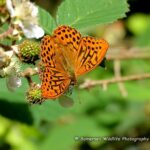
- NAME: Silver washed Fritillary – Argynnis paphia / WINGSPAN: 72-76mm / FLIGHT TIME: July-Sept / HABITAT: Broadleaved woodland, especially oak woodland or woodlands with sunny rides and glades. It occasionally uses mixed broadleaved and conifer plantations. In parts of south-west England and Ireland wooded hedgerows and sheltered lanes next to woods are used / LARVAL FOODPLANT: Dog Violet

-
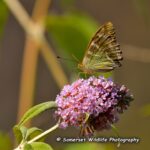
- NAME: Silver washed Fritillary – Argynnis paphia / WINGSPAN: 72-76mm / FLIGHT TIME: July-Sept / HABITAT: Broadleaved woodland, especially oak woodland or woodlands with sunny rides and glades. It occasionally uses mixed broadleaved and conifer plantations. In parts of south-west England and Ireland wooded hedgerows and sheltered lanes next to woods are used / LARVAL FOODPLANT: Dog Violet

-
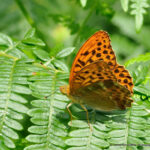
- NAME: Silver washed Fritillary – Argynnis paphia / WINGSPAN: 72-76mm / FLIGHT TIME: July-Sept / HABITAT: Broadleaved woodland, especially oak woodland or woodlands with sunny rides and glades. It occasionally uses mixed broadleaved and conifer plantations. In parts of south-west England and Ireland wooded hedgerows and sheltered lanes next to woods are used / LARVAL FOODPLANT: Dog Violet

-

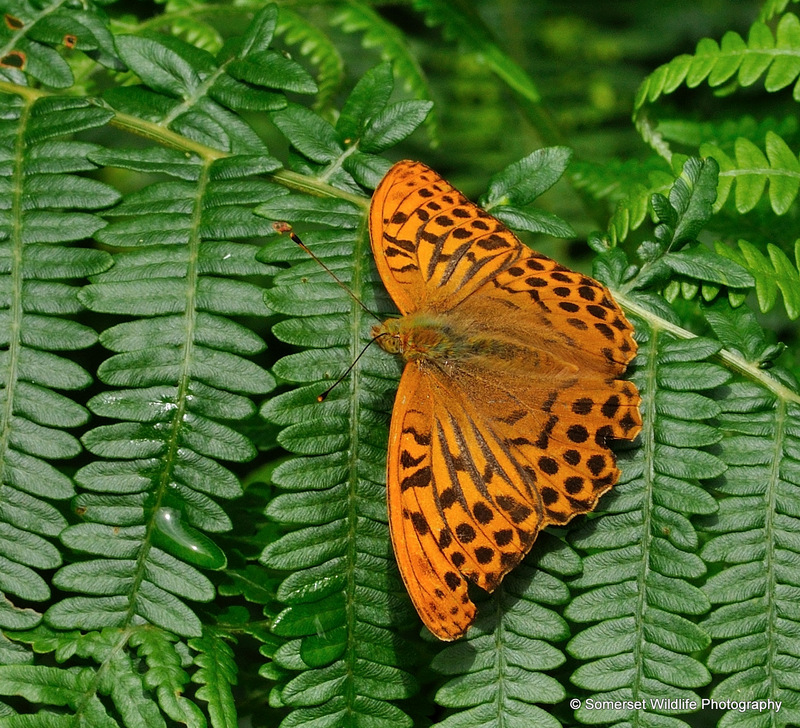
- NNAME: Silver washed Fritillary – Argynnis paphia / WINGSPAN: 72-76mm / FLIGHT TIME: July-Sept / HABITAT: Broadleaved woodland, especially oak woodland or woodlands with sunny rides and glades. It occasionally uses mixed broadleaved and conifer plantations. In parts of south-west England and Ireland wooded hedgerows and sheltered lanes next to woods are used / LARVAL FOODPLANT: Dog Violet
-
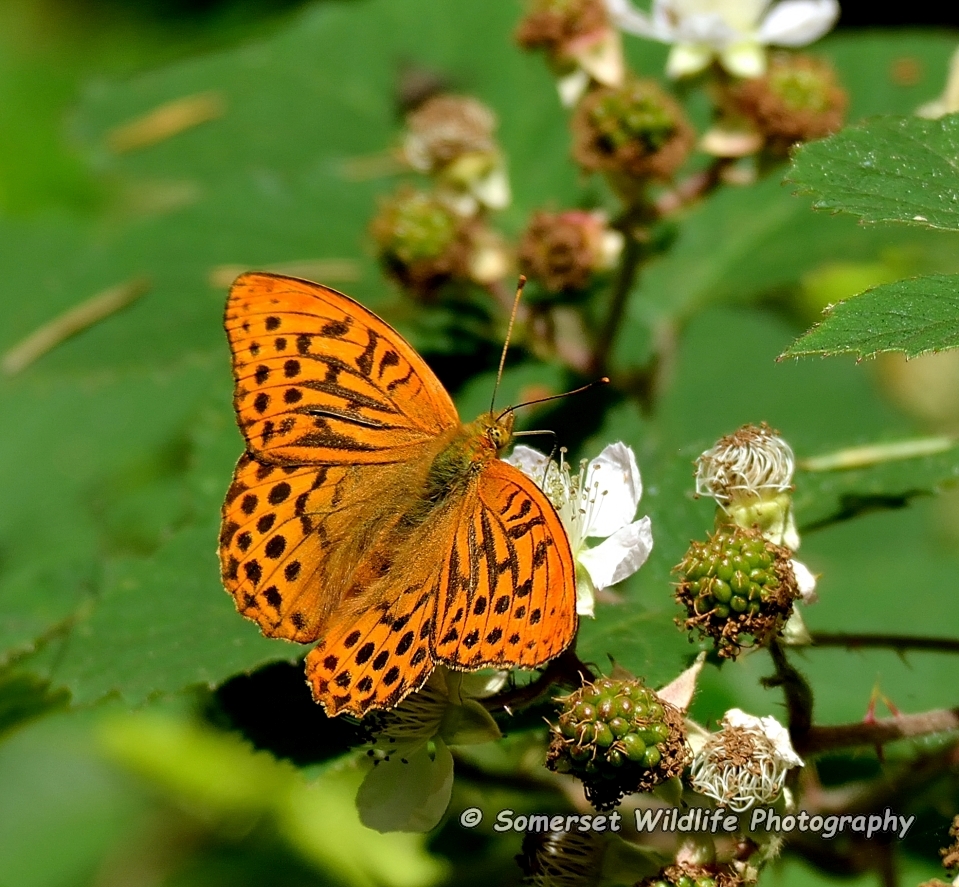
- NAME: Silver washed Fritillary – Argynnis paphia / WINGSPAN: 72-76mm / FLIGHT TIME: July-Sept / HABITAT: Broadleaved woodland, especially oak woodland or woodlands with sunny rides and glades. It occasionally uses mixed broadleaved and conifer plantations. In parts of south-west England and Ireland wooded hedgerows and sheltered lanes next to woods are used / LARVAL FOODPLANT: Dog Violet
-

- NAME: Silver washed Fritillary – Argynnis paphia / WINGSPAN: 72-76mm / FLIGHT TIME: July-Sept / HABITAT: Broadleaved woodland, especially oak woodland or woodlands with sunny rides and glades. It occasionally uses mixed broadleaved and conifer plantations. In parts of south-west England and Ireland wooded hedgerows and sheltered lanes next to woods are used / LARVAL FOODPLANT: Dog Violet

-
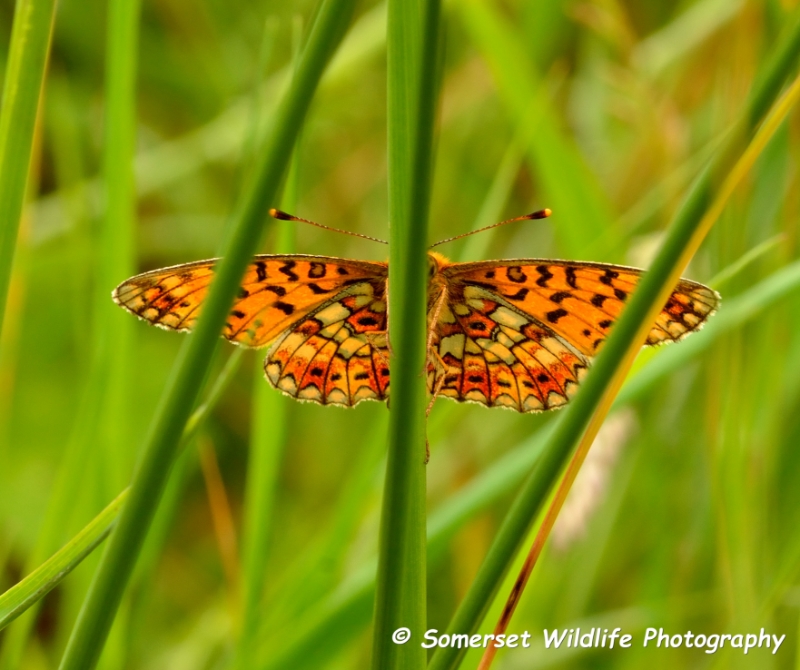
- NAME: Small Pearl-bordered Fritillary – Boloria selene / WINGSPAN: 41-44mm / FLIGHT TIME: May-July & August / HABITAT: Broadleaved woodland, especially oak woodland or woodlands with sunny rides and glades. It occasionally uses mixed broadleaved and conifer plantations. In parts of south-west England and Ireland wooded hedgerows and sheltered lanes next to woods are used / LARVAL FOODPLANT: Damp grassland flushes and moorland (in northern and western Britain); woodland glades and clearings (mainly in southern Britain); grassland with Bracken and/or patches of scrub and open wood pasture and wood edges in Scotland.

-
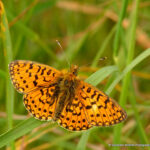
- NAME: Small Pearl-bordered Fritillary – Boloria selene / WINGSPAN: 41-44mm / FLIGHT TIME: May-July & August / HABITAT: Broadleaved woodland, especially oak woodland or woodlands with sunny rides and glades. It occasionally uses mixed broadleaved and conifer plantations. In parts of south-west England and Ireland wooded hedgerows and sheltered lanes next to woods are used / LARVAL FOODPLANT: Damp grassland flushes and moorland (in northern and western Britain); woodland glades and clearings (mainly in southern Britain); grassland with Bracken and/or patches of scrub and open wood pasture and wood edges in Scotland.

-
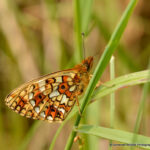
- NAME: Small Pearl-bordered Fritillary – Boloria selene / WINGSPAN: 41-44mm / FLIGHT TIME: May-July & August / HABITAT: Broadleaved woodland, especially oak woodland or woodlands with sunny rides and glades. It occasionally uses mixed broadleaved and conifer plantations. In parts of south-west England and Ireland wooded hedgerows and sheltered lanes next to woods are used / LARVAL FOODPLANT: Damp grassland flushes and moorland (in northern and western Britain); woodland glades and clearings (mainly in southern Britain); grassland with Bracken and/or patches of scrub and open wood pasture and wood edges in Scotland.
-
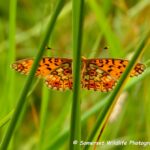
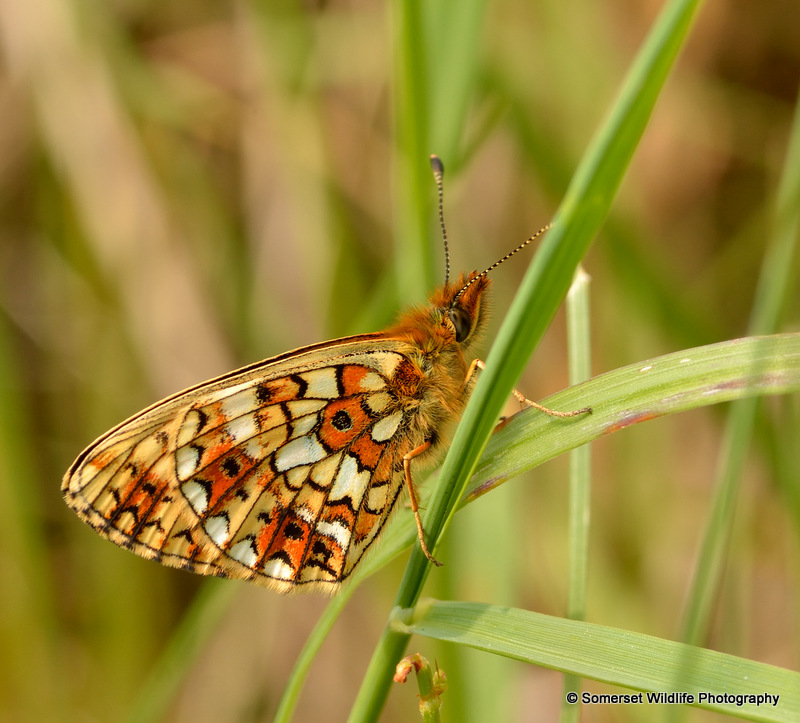
- NAME: Small Pearl-bordered Fritillary – Boloria selene / WINGSPAN: 41-44mm / FLIGHT TIME: May-July & August / HABITAT: Broadleaved woodland, especially oak woodland or woodlands with sunny rides and glades. It occasionally uses mixed broadleaved and conifer plantations. In parts of south-west England and Ireland wooded hedgerows and sheltered lanes next to woods are used / LARVAL FOODPLANT: Damp grassland flushes and moorland (in northern and western Britain); woodland glades and clearings (mainly in southern Britain); grassland with Bracken and/or patches of scrub and open wood pasture and wood edges in Scotland.
-
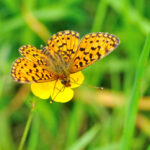
- NAME: Small Pearl-bordered Fritillary – Boloria selene / WINGSPAN: 41-44mm / FLIGHT TIME: May-July & August / HABITAT: Broadleaved woodland, especially oak woodland or woodlands with sunny rides and glades. It occasionally uses mixed broadleaved and conifer plantations. In parts of south-west England and Ireland wooded hedgerows and sheltered lanes next to woods are used / LARVAL FOODPLANT: Damp grassland flushes and moorland (in northern and western Britain); woodland glades and clearings (mainly in southern Britain); grassland with Bracken and/or patches of scrub and open wood pasture and wood edges in Scotland.

-
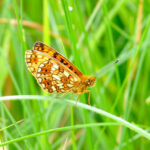
- NAME: Small Pearl-bordered Fritillary – Boloria selene / WINGSPAN: 41-44mm / FLIGHT TIME: May-July & August / HABITAT: Broadleaved woodland, especially oak woodland or woodlands with sunny rides and glades. It occasionally uses mixed broadleaved and conifer plantations. In parts of south-west England and Ireland wooded hedgerows and sheltered lanes next to woods are used / LARVAL FOODPLANT: Damp grassland flushes and moorland (in northern and western Britain); woodland glades and clearings (mainly in southern Britain); grassland with Bracken and/or patches of scrub and open wood pasture and wood edges in Scotland.
